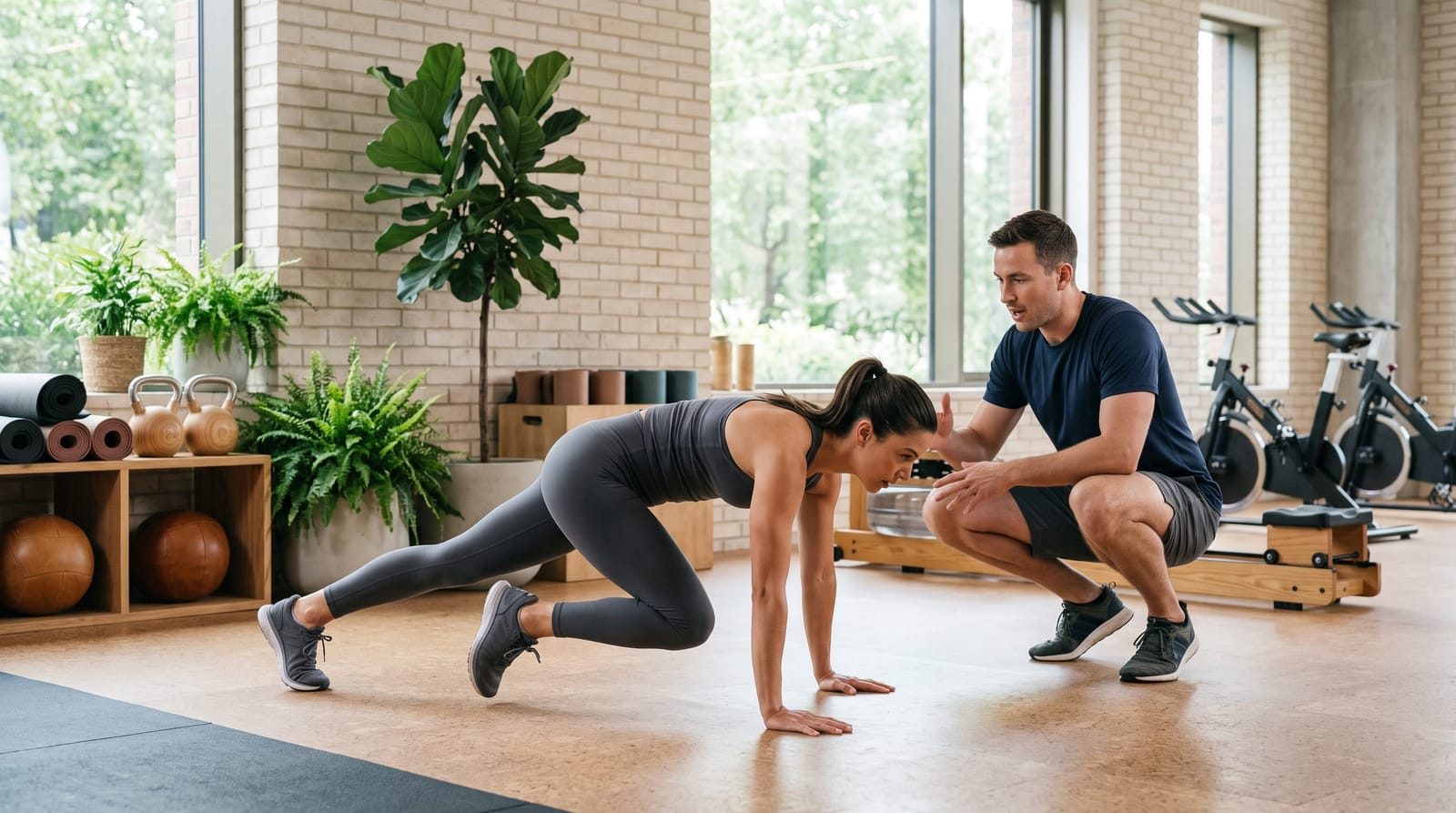
Combining HIIT, Boxing, and Strength Training: Survive 41's Hybrid Workout Approach
If you've been searching for HIIT classes near me and wondering whether one workout style is enough to reach your goals, the answer might surprise you. At Survive 41, the philosophy is built on a simple but powerful idea: no single training modality delivers everything your body needs. That's why the programming here blends HIIT, boxing, and strength training into one cohesive hybrid workout boxing HIIT strength training system. This guide breaks down exactly how that model works: the science behind it, how the weekly schedule is structured, and why combining these three disciplines produces faster, more sustainable results than sticking to any one approach alone. Whether you're new to fitness or a seasoned athlete, understanding this framework will help you get more out of every session.
What Is a Hybrid Workout Model and Why Does It Matter?
The term "hybrid workout" gets used loosely in the fitness world. At Survive 41, it has a specific meaning: a structured program that deliberately cycles athletes through high-intensity interval training, boxing skill work, and resistance-based strength training within a single weekly schedule.
This isn't random cross-training. It's intentional programming where each modality fills a gap the others leave behind. HIIT pushes your cardiovascular system to its limits and torches calories. Boxing develops coordination, speed, and mental toughness. Strength training builds the muscle that shapes your body and protects your joints. Together, they create a complete athlete.
Research supports this approach. Studies show that combining resistance training with high-intensity cardio can increase fat loss by up to 28% more than cardio alone. Meanwhile, athletes who train across multiple movement patterns report fewer overuse injuries because no single muscle group is repeatedly stressed without recovery. If you've ever hit a plateau doing the same class five days a week, this is likely why.
To understand what is a hybrid gym and how it differs from a traditional fitness facility, the key distinction is programming depth. A traditional gym gives you equipment. A hybrid gym gives you a system.
The Science Behind Combining HIIT, Boxing, and Strength Training
Understanding why this hybrid workout boxing HIIT strength training model works starts with physiology. Each training style targets different energy systems and produces different adaptations in the body.
How HIIT Affects Your Metabolism
HIIT, high-intensity interval training, alternates short bursts of maximum effort with brief recovery periods. This pattern creates a phenomenon called excess post-exercise oxygen consumption (EPOC), sometimes called the "afterburn effect." After an intense HIIT session, your body continues burning calories at an elevated rate for up to 24 hours. Some studies estimate this post-workout calorie burn accounts for an additional 6% to 15% of total calories burned during the session itself.
To go deeper on the mechanisms, read about how does HIIT training work: it covers the cardiovascular and metabolic science in detail.
What Boxing Adds to the Mix
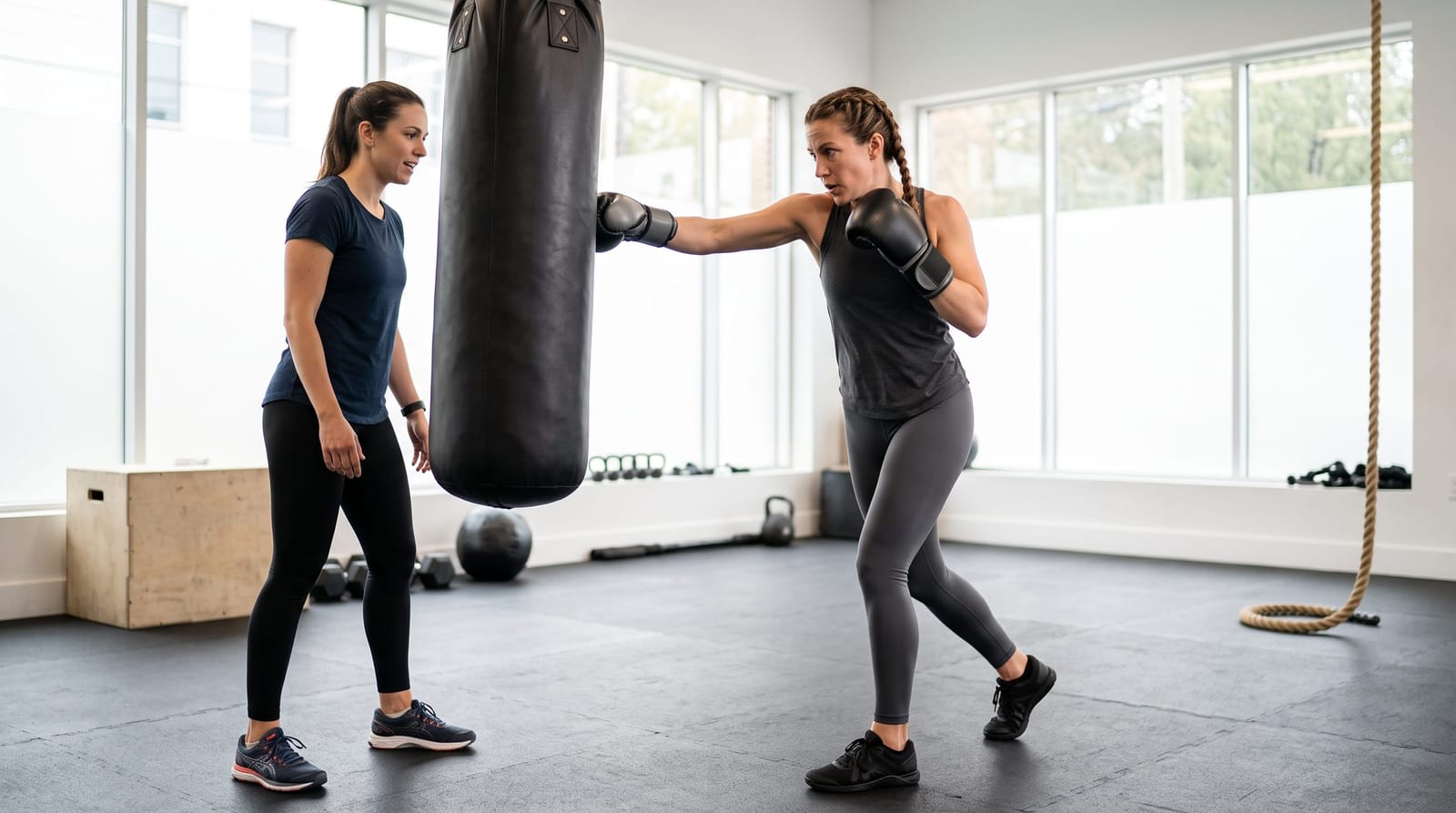
Boxing is not just a cardio activity. A 30-minute boxing workout can burn between 300 and 500 calories depending on body weight and intensity. More importantly, boxing develops fast-twitch muscle fibers, rotational power, and hand-eye coordination that traditional gym exercises simply don't train. Punching combinations require full-body tension: your core, hips, shoulders, and legs all fire together. That full-chain activation builds athletic strength that carries over into everyday movement.
Why Strength Training Completes the Triangle
Without resistance training, HIIT and boxing can lead to muscle loss over time, especially in athletes training at high frequency. Strength work preserves and builds lean muscle mass, which is the primary driver of resting metabolic rate. More muscle means more calories burned at rest, 24 hours a day. Adding even two strength sessions per week to a cardio-dominant program has been shown to increase lean muscle retention by a significant margin compared to cardio-only training.
How Survive 41 Structures the Weekly Schedule
The hybrid workout boxing HIIT strength training approach at Survive 41 isn't about cramming three things into one chaotic class. It's about smart sequencing across the week so that each session builds on the last without overloading the same systems.
A Sample Weekly Training Rhythm
A typical week at Survive 41 might look like this:
- Monday: HIIT conditioning: timed intervals, full-body cardio circuits, metabolic work
- Tuesday: Boxing technique and combinations: focus mitts, bag work, footwork drills
- Wednesday: Strength training: compound lifts, resistance circuits, progressive overload
- Thursday: Hybrid HIIT + boxing: combining punch combinations with bodyweight intervals
- Friday: Full hybrid class, all three modalities in one structured session
- Saturday/Sunday: Active recovery or open training
This structure matters because it allows for physical adaptation. Your cardiovascular system recovers between hard cardio days. Your muscles repair and grow between strength sessions. Your nervous system, heavily taxed by boxing's coordination demands, gets time to consolidate new movement patterns.
How Classes Are Designed Inside Each Session
Within each class, the format follows a proven sequence. Sessions typically open with a dynamic warm-up lasting 8 to 10 minutes. The main work block runs 25 to 35 minutes. A cooldown and mobility segment closes the session. This structure keeps intensity high where it matters and prevents the kind of fatigue that leads to poor form and injury.
If you want to know exactly what happens in a HIIT class at Survive 41, from the moment you walk in to the final cooldown, that breakdown covers the full experience.
Why Each Modality Makes the Others More Effective
One of the most compelling arguments for the hybrid workout boxing HIIT strength training model is synergy. These three training styles don't just coexist: they actively improve each other's outcomes.
Strength Training Makes HIIT More Powerful
When your muscles are stronger, they can generate more force during HIIT intervals. More force output means a higher heart rate response, more muscle fiber recruitment, and a greater metabolic demand, all of which accelerate results. Athletes who add two to three strength sessions per week to their HIIT schedule have been shown to improve VO2 max by up to 9% more than those doing HIIT alone.
HIIT Improves Boxing Endurance
Boxing requires the ability to maintain explosive output for multiple rounds. That capacity, sustaining power under fatigue, is exactly what HIIT training develops. The interval structure of HIIT mirrors the round-and-rest format of boxing almost perfectly. Athletes who condition with HIIT report hitting harder and moving faster in later rounds because their aerobic base can support repeated sprints of effort.
Boxing Strengthens the Core and Improves Strength Transfer
Every punch thrown correctly originates from the hips and core, not the arm. This means regular boxing work builds rotational strength and core stability that directly enhances performance in strength exercises like deadlifts, squats, and overhead presses. Many athletes notice that their compound lifts improve after several weeks of boxing training, even when lifting volume stays the same.
HIIT Versus Other Cardio Approaches in a Hybrid System
Some athletes ask whether they could substitute steady-state cardio, like jogging or cycling, for the HIIT component in this system. The answer depends on your goals, but the data generally favors HIIT when time efficiency and fat loss are priorities.
Studies comparing HIIT to moderate-intensity continuous training consistently show that HIIT produces equal or greater improvements in cardiovascular fitness in roughly half the time. For someone training 4 to 5 days a week across multiple modalities, that time efficiency is critical: you need your cardio to deliver maximum results without eating into recovery capacity.
For a direct comparison of the two approaches and their respective fat-loss outcomes, explore the breakdown of HIIT vs cardio for fat loss: it puts the research side by side in plain language.
The reason Survive 41 programs HIIT rather than steady-state cardio as the primary conditioning tool is also about the energy system overlap with boxing. Both HIIT and boxing demand short, explosive outputs followed by brief recovery. Training your body in that pattern prepares it specifically for the demands of boxing class, creating a direct transfer of conditioning.
Survive 41 as a True One-Stop Gym in the Bronx and Westchester
For residents of the Bronx, Yonkers, and surrounding Westchester communities, the practical reality of the hybrid workout boxing HIIT strength training model is this: you don't need multiple gym memberships to train like an athlete. Survive 41 consolidates everything under one roof, under one programming philosophy, with coaching staff who understand how these disciplines connect.
This matters more than it might seem. Gyms that specialize in only one style, a boxing gym, a CrossFit box, or a traditional weight room, tend to produce athletes who are excellent in one dimension and underdeveloped in others. A pure boxer may lack the structural strength to prevent injury. A powerlifter may lack the cardiovascular base to sustain effort. A steady-state cardio athlete may struggle with explosive power.
The hybrid model closes all three gaps simultaneously. Over 12 weeks of consistent training across these modalities, members typically see measurable improvements in all three areas: cardiovascular endurance, muscular strength, and body composition. Survive 41's programming is designed to deliver those results to everyday people, not just competitive athletes.
The community environment accelerates the process. Group training has been shown in peer-reviewed research to increase workout intensity by up to 26% compared to solo training. When you're in a room full of people pushing hard, your effort level rises to match the energy. That's not motivation: that's physiology.
Related Topics Worth Exploring
This guide covers the framework behind the hybrid model, but there's more depth available on specific aspects of this training approach. If you're weighing the differences between a hybrid gym and a conventional facility, the detailed breakdown of what is a hybrid gym explains the structural and programming distinctions clearly. Future posts in this cluster will also cover beginner entry points into each modality, how to progress through the program over time, and nutrition strategies that support high-frequency training across multiple disciplines.
Conclusion: The Case for Training Smarter, Not Narrower
The hybrid workout boxing HIIT strength training model at Survive 41 isn't a compromise between three disciplines: it's a deliberate system built on the understanding that each one makes the others stronger. HIIT drives metabolic adaptation. Boxing builds speed, coordination, and power. Strength training creates the muscular foundation that makes everything else perform better. Combined and programmed intelligently across the week, these three modalities deliver results that no single approach can match alone.
If you're ready to experience what this training system feels like in practice, Survive 41 serves the Bronx and Westchester County with classes designed for real people chasing real results. Come in for a class and see how the pieces fit together.