
How Many Calories Do You Burn in a Boxing, HIIT & Strength Combo Workout?
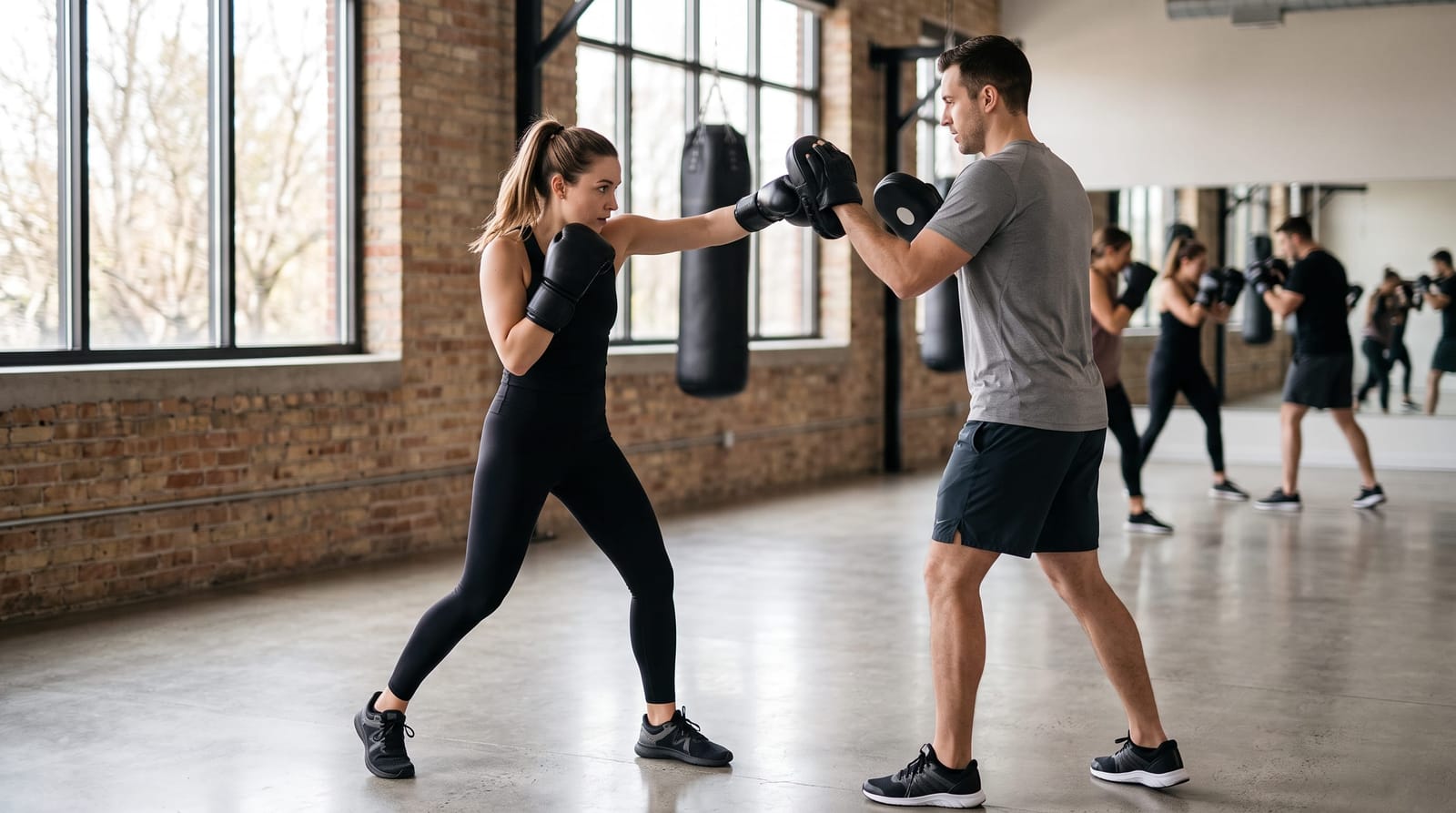
If you've ever walked out of a boxing class drenched in sweat and wondered exactly how many calories you just torched, you're not alone. "Calories burned boxing class" is one of the most searched fitness questions, and for good reason. Boxing is one of the highest-calorie-burning activities you can do. But what happens when you combine it with HIIT and strength training in a single hybrid workout session? The numbers get even more interesting. This post breaks down the calorie math and explains why the hybrid training model creates results that go far beyond what any single workout style can deliver.
How Many Calories Does a Boxing Class Burn?
Let's start with the foundational number. Research and fitness data consistently show that a boxing class burns between 400 and 1,000 calories per hour, depending on your body weight, fitness level, and the specific type of boxing work involved.
Here's how the breakdown looks across different boxing activities:
- Shadow boxing: Approximately 400-500 calories per hour: lower impact, but still a solid full-body burn
- Bag work (heavy bag training): Roughly 500-700 calories per hour: more resistance means more output
- Boxing class (structured, coached): Typically 500-800 calories per hour: combines movement, combinations, and rest intervals
- Sparring: Up to 800-1,000 calories per hour: the highest intensity format, maxing out cardiovascular demand
Body weight plays a significant role in these figures. A 150-pound person will burn fewer calories than a 200-pound person performing the same workout at the same intensity. That said, boxing consistently ranks among the top calorie-burning activities regardless of where you fall on the scale: outperforming cycling, swimming, and most gym cardio sessions in head-to-head comparisons.
What makes boxing especially effective is the combination of aerobic and anaerobic work. Throwing punches engages your core, shoulders, arms, and legs simultaneously, turning your entire body into one continuous calorie-burning machine.
What About HIIT? How Does That Layer On Top?
High-intensity interval training (HIIT) is built on a simple but powerful principle: short bursts of maximum effort followed by brief rest periods. This structure forces your body to work harder than it could sustain at a steady pace, and the calorie numbers reflect that.
A typical 30-minute HIIT session burns between 300 and 450 calories, while a full 60-minute session can reach 450-600 calories or more depending on exercise selection and intensity. But the raw calorie burn during the workout tells only part of the story.
HIIT is one of the most researched methods for triggering EPOC: Excess Post-Exercise Oxygen Consumption, often called the "afterburn effect." After a high-intensity session, your body continues burning additional calories for up to 24 hours as it works to restore oxygen levels, repair muscle tissue, and return to a resting state. Studies have estimated EPOC can add anywhere from 6% to 15% more calories burned on top of the workout itself: a meaningful bonus that steady-state cardio simply doesn't produce at the same level.
In a hybrid setting, HIIT segments are often woven directly into boxing rounds: think burpees between combinations, jump rope intervals, or explosive plyo work that keeps heart rate elevated across the entire session.
How Does Strength Training Fit Into the Calorie Picture?
Strength training burns fewer calories per hour than boxing or HIIT on its own: typically between 180 and 400 calories per hour depending on the exercises, weight used, and rest periods. But dismissing it based on that number alone would be a significant mistake.
Here's why: strength training builds muscle. And muscle tissue burns more calories at rest than fat tissue does. Over time, increasing your lean muscle mass means your body burns more calories around the clock, even when you're sleeping. This is called your resting metabolic rate (RMR), and strength training is one of the most effective tools for raising it.
Compound movements like squats, deadlifts, and overhead presses engage multiple large muscle groups at once, which spikes calorie burn during the session. But more importantly, the muscle damage created by lifting triggers its own version of EPOC: your body needs energy and oxygen to repair those fibers, which keeps your metabolism elevated for hours post-workout.
When strength work is built into a hybrid session after boxing and HIIT, your body is already in a high-metabolic state. The compound effect is greater than each modality alone.
The Hybrid Advantage: Why Combining All Three Multiplies the Burn
Here's where the math gets compelling. When you train boxing, HIIT, and strength together in a structured hybrid format, you're not just adding the calorie totals: you're stacking three distinct afterburn effects on top of each other.
Consider a realistic hybrid workout session:
- 20 minutes of boxing-based work: ~200-300 calories burned during
- 15 minutes of HIIT circuits: ~150-225 calories burned during
- 20 minutes of strength work: ~100-150 calories burned during
- Total in-session burn: Approximately 450-675 calories in under an hour
- Plus EPOC from all three modalities: An additional 50-150 calories burned over the following 12-24 hours
That's a total metabolic impact that a single-modality workout, 60 minutes on the treadmill, a standalone spin class, or an isolated lifting session, simply can't match. The variety of stimuli (cardiovascular, metabolic, and muscular) creates a broader, deeper physiological response.
This is precisely what makes the hybrid gym model so effective. Rather than forcing you to choose between cardio or strength, it builds a training structure where each element amplifies the others.
What Factors Affect Your Personal Calorie Burn?
Calorie estimates are averages, and your actual burn will vary based on several individual factors:
- Body weight: More mass requires more energy to move: heavier individuals typically burn more calories performing the same workout
- Fitness level: Beginners often burn more calories early on because their bodies work harder to adapt; trained athletes become more efficient over time
- Workout intensity: Pushing harder, heavier weights, faster combinations, shorter rest, directly increases calorie expenditure
- Age and metabolism: Metabolic rate naturally changes with age, which can influence how efficiently your body burns fuel
- Sex and body composition: Muscle-to-fat ratio affects both in-session burn and resting metabolic rate
Wearable fitness trackers can give you a personalized baseline, though they're estimates rather than precise measurements. The most useful approach is to treat these numbers as directional data and focus on consistent effort over time.
Frequently Asked Questions
How many calories do you burn in a 45-minute boxing class?
A 45-minute boxing class typically burns between 300 and 600 calories, depending on your weight and the intensity of the session. More structured, coach-led classes with limited rest periods tend to land at the higher end of that range. If the class also includes HIIT or strength elements, the total burn and afterburn effect will be higher.
Does boxing burn more calories than running?
At comparable intensities, boxing tends to burn more calories per hour than steady-state running. Running at a moderate pace burns roughly 400-600 calories per hour, while a high-intensity boxing session can reach 700-1,000 calories per hour. Boxing also engages more muscle groups simultaneously, which contributes to a stronger EPOC effect after the workout ends.
What is EPOC and why does it matter for calorie burn?
EPOC stands for Excess Post-Exercise Oxygen Consumption: commonly called the afterburn effect. After intense exercise like boxing or HIIT, your body continues burning additional calories as it works to restore oxygen levels, repair muscle tissue, and return to a baseline state. This process can last anywhere from a few hours to 24 hours post-workout, effectively extending the calorie-burning window well beyond the gym session itself.
Is a hybrid workout better for fat loss than cardio alone?
Research generally supports combining cardiovascular training with strength work for fat loss outcomes. Cardio burns calories during the session; strength training raises your resting metabolic rate over time by building muscle; and HIIT produces a strong afterburn effect. A hybrid approach that includes all three tends to produce more comprehensive and sustainable results than relying on cardio alone. Individual results will vary: consulting a qualified fitness professional for a personalized plan is always a smart move.
The Bottom Line
The calories burned in a boxing class are impressive on their own: up to 1,000 calories per hour at peak intensity. But when you layer HIIT and strength training into the same session, you create a compounding calorie-burn effect that lasts long after you leave the gym. That's the core logic behind the hybrid training model: three modalities working together to deliver more than the sum of their parts. If you're evaluating whether this kind of training fits your goals and lifestyle, exploring how a hybrid gym membership stacks up in terms of value is a natural next step.