Is Boxing a Full-Body Workout? What Muscles Does Boxing Train?

If you've ever walked out of a boxing class with your legs shaking, shoulders burning, and core completely spent, you already know the answer. But if you're still asking is boxing a full body workout before committing to your first class, this guide breaks it down completely. We'll map every major muscle group boxing engages, explain how proper technique drives the conditioning stimulus, and make the case that a well-structured boxing program, like the ones at Survive 41, can replace the fragmented routine of juggling multiple gyms, classes, and programs.
The Short Answer: Yes, Boxing Is a Full-Body Workout
Boxing is one of the most complete physical conditioning systems ever developed. A single session demands explosive power from your legs, rotational force through your core, pushing and pulling strength from your upper body, and sustained cardiovascular output from your heart and lungs, all simultaneously.
According to research on high-intensity sports, a one-hour boxing training session can burn between 500 and 800 calories, depending on body weight, intensity, and the structure of the class. But caloric burn is just one dimension. What makes boxing genuinely full-body is the neuromuscular demand: your nervous system is coordinating dozens of muscle groups at once to generate force, maintain balance, absorb impact, and reset for the next combination.
When you ask is boxing a full body workout, the more useful question is: which muscles aren't working? The answer is almost none. Here's exactly what gets trained and why.
The Core: Your Engine in Every Punch
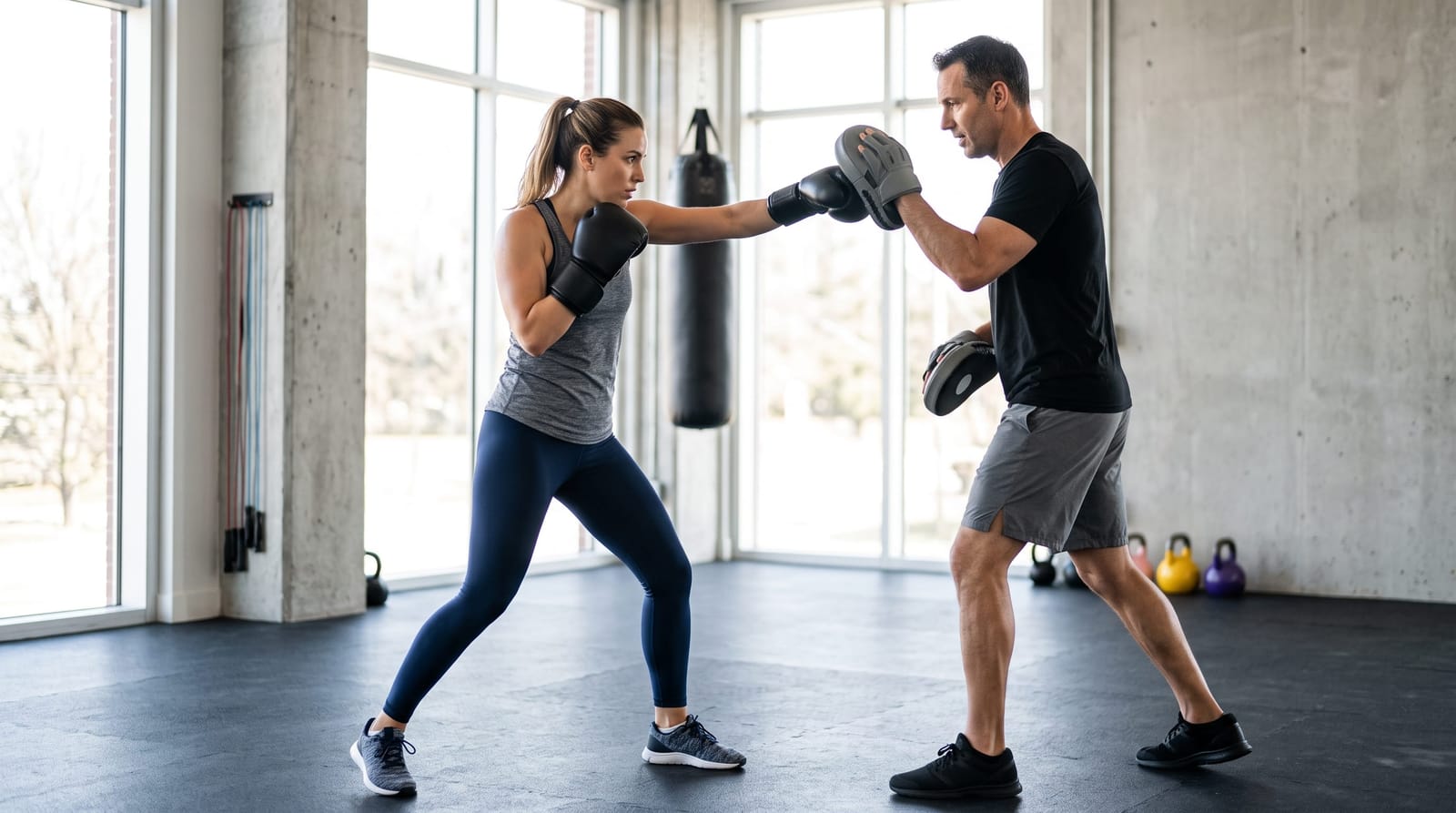
Every punch you throw originates in your core. Not your arm. Your arm is just the delivery mechanism. The power chain runs from your back foot, through your hips, rotates through your obliques and transverse abdominis, and transfers up through your shoulders and into your fist.
The core muscles heavily engaged during boxing include:
- Obliques: responsible for rotational power in hooks and crosses
- Transverse abdominis: the deep stabilizing layer that protects your spine under load
- Rectus abdominis: engaged during defensive movements, slipping, and body work
- Erector spinae: the lower back muscles that keep you upright during constant movement
Unlike crunches or even planks, boxing trains your core dynamically: under real rotational load, at speed, while your cardiovascular system is under stress. That's a fundamentally different and more functional adaptation than isolated ab work. After 8 weeks of consistent boxing training, most athletes report a measurable increase in rotational power and a visible improvement in core definition.
Legs and Hips: The Foundation of Boxing Power
Peloton master trainer Kendall Toole put it plainly: "Footwork is so important because if you don't know where your weight is placed or how to move around a ring, you're not going to last in that fight." The same truth applies to every boxing class.
Your lower body is continuously active throughout a boxing session. The key leg muscles engaged include:
- Quadriceps: drive your stance, push-offs, and forward pressure
- Hamstrings: control deceleration and hip extension during combinations
- Glutes: the primary power generator in your cross and right hook
- Calves: keep you light on your feet during lateral movement and pivoting
- Hip flexors: engage during knee strikes, defensive movement, and jab extension
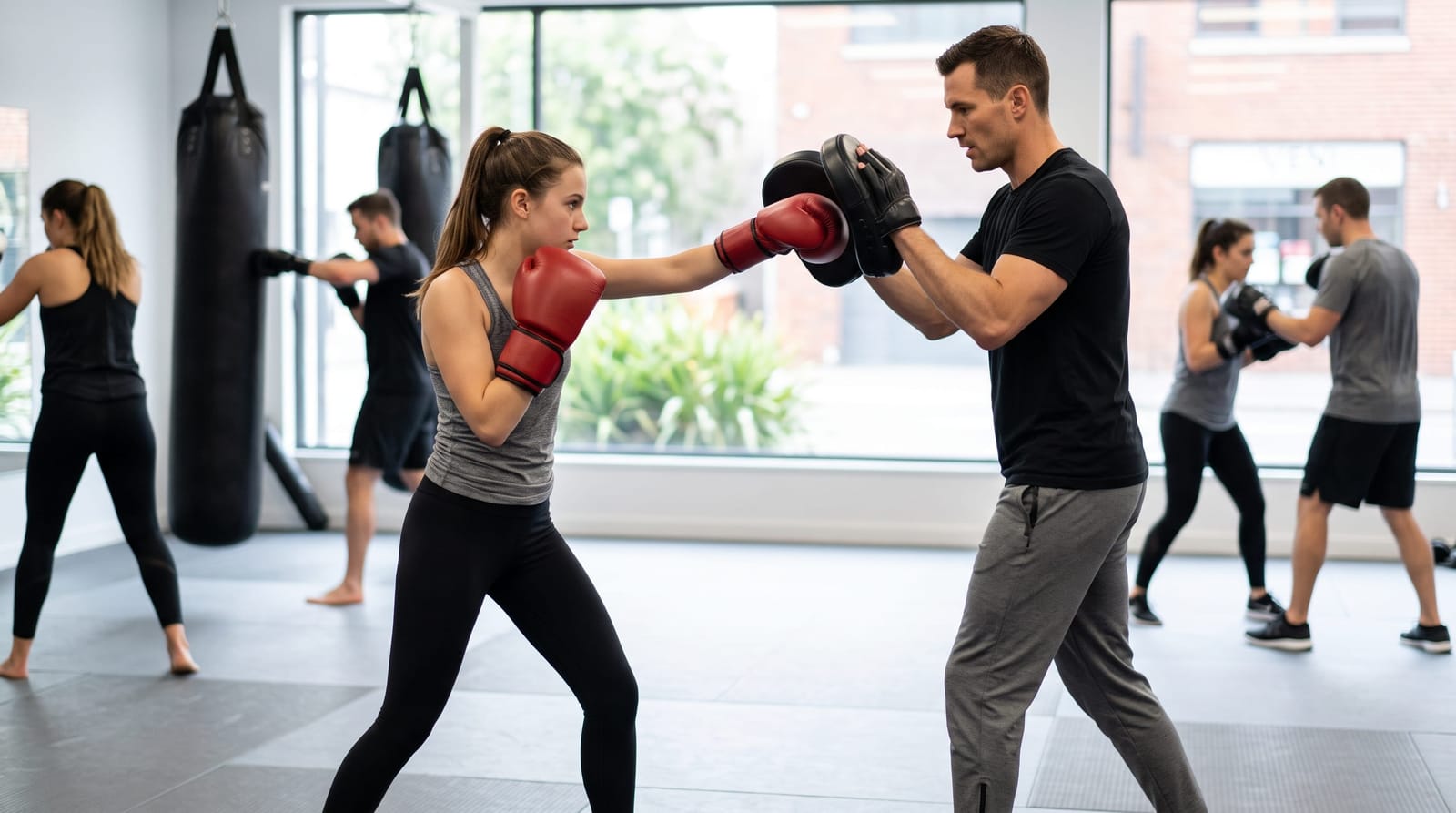
A standard 45-minute boxing class at Survive 41 involves hundreds of stance transitions, pivots, and lateral steps. Over time, this builds lower body endurance and functional leg strength that transfers directly to everyday movement, without a single squat rack required.
Upper Body: Shoulders, Back, Arms, and Chest
Boxing trains the upper body across multiple movement patterns simultaneously: something most gym programs fail to replicate. "Throwing a punch works your entire body, from your arms and shoulders all the way to your core and legs," explains Dr. Jason Edwards, a sports medicine physician. That chain doesn't stop at the shoulders.
Here's the upper body breakdown by muscle group and punch type:
- Deltoids (shoulders): primary movers in all punches; take enormous volume over a session
- Triceps: extend the arm in every straight punch (jab, cross)
- Biceps: decelerate the punch and protect the elbow joint on retraction
- Pectorals (chest): heavily recruited in hooks and body shots
- Trapezius and rhomboids (upper back): stabilize the shoulder blades under load
- Latissimus dorsi (lats): contribute to pulling back after extension and defensive posture
- Rotator cuff muscles: protect shoulder integrity across thousands of reps
Because boxing combines pushing, pulling, and stabilizing in every combination, it creates balanced upper body development, not just chest and biceps like traditional gym splits often produce. Over time, boxers develop a characteristic upper body density that reflects real functional strength.
Cardiovascular and Metabolic Conditioning: The Layer Most Workouts Miss
Even if you accepted that boxing is a full body workout purely from a muscular standpoint, the cardiovascular component separates it from conventional strength training. Boxing operates primarily in an aerobic-anaerobic mixed energy system: you work hard in short explosive bursts, recover briefly, then explode again. This mirrors interval training protocols that research consistently shows are superior to steady-state cardio for:
- Reducing body fat percentage
- Improving VO2 max (cardiovascular capacity)
- Increasing post-exercise oxygen consumption (the "afterburn" effect)
- Building metabolic efficiency over time
A 2019 study published in the Journal of Strength and Conditioning Research found that participants in a 12-week boxing program reduced body fat by an average of 3.6% while simultaneously improving muscular endurance: a combination that most single-mode programs struggle to achieve. If you want to understand just how significant the caloric impact is session by session, see our breakdown of calories burned boxing class.
Why Boxing at Survive 41 Eliminates the Need for Multiple Programs
Here's the practical argument: most people who want to get fit end up bouncing between a strength program, a cardio routine, a yoga class for flexibility, and maybe a core-specific session. That fragmentation costs money, time, and mental energy, and most people quit before the pieces ever come together.
Boxing consolidates all of it. In a single Survive 41 class you will:
- Train your cardiovascular system at high intensity for sustained periods
- Develop functional strength across all major muscle groups
- Build core stability through dynamic, loaded rotation
- Improve coordination, balance, and spatial awareness
- Develop mental resilience through sustained effort under discomfort
That's not a marketing claim: it's the mechanical reality of what boxing demands from your body. When technique is coached properly, as it is at Survive 41, every class becomes a complete conditioning stimulus. Nothing gets left out.
Frequently Asked Questions
Is boxing a full body workout for beginners, or only advanced athletes?
Boxing is a full body workout at every skill level. Beginners engage the same muscle groups as advanced boxers: the difference is technique, power output, and conditioning level. Beginners often find that the upper body and core fatigue fastest in early sessions, while leg endurance builds over the first few weeks of consistent training.
How often should you box to see full-body conditioning results?
Most coaches recommend 3 sessions per week as the minimum threshold to see measurable full-body conditioning changes. At that frequency, most beginners notice improved muscular endurance within 3-4 weeks, cardiovascular improvement within 6 weeks, and visible body composition changes within 8-12 weeks of consistent training.
Does boxing build muscle, or just burn fat?
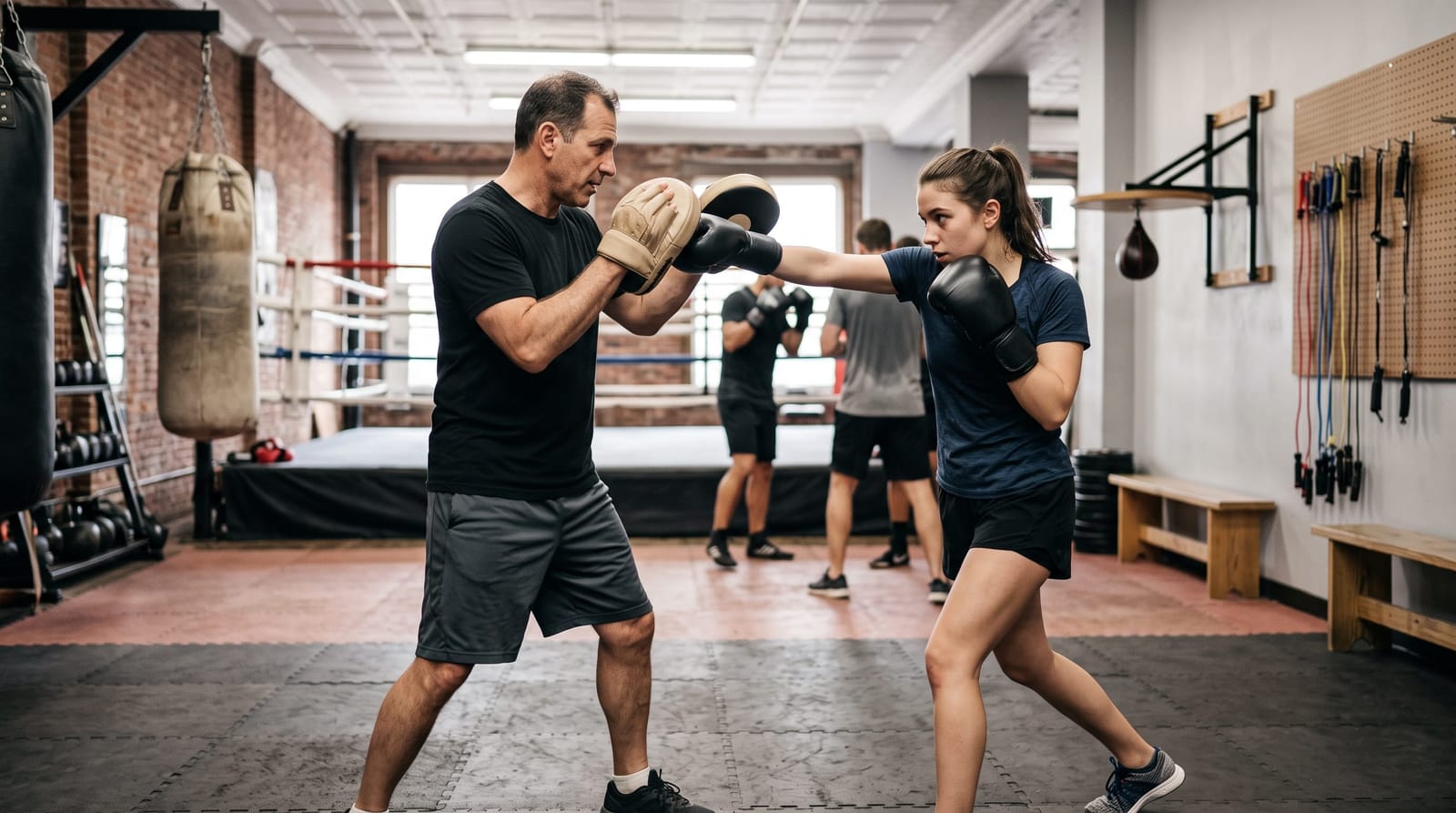
Boxing does both. The high-volume, resistance-based nature of punching, especially with bag work and mitts, creates enough mechanical tension to stimulate muscle growth in the shoulders, arms, back, and core. Simultaneously, the cardiovascular demand creates a caloric deficit that supports fat loss. The result is a leaner, more defined physique rather than bulk.
Is boxing a good workout if you don't want to spar?
Absolutely. The majority of the full-body conditioning in boxing comes from bag work, mitt work, shadow boxing, and conditioning drills: none of which require contact with another person. Survive 41's classes are structured to deliver maximum physical results whether or not sparring is ever part of your training.
Conclusion
The question is boxing a full body workout has a definitive answer: yes, and then some. From your legs generating the initial force, to your core transferring it, to your shoulders and arms delivering it: every punch is a full kinetic chain event. Add in footwork, defensive movement, cardiovascular demand, and the mental focus required to sustain it all, and boxing becomes one of the most complete training systems available. At Survive 41, that system is structured, coached, and accessible, whether you're throwing your first jab or your ten-thousandth combination.