Boxing vs. Other Workout Classes: Why Boxing Delivers Results Faster
When you're choosing a workout class, the options feel endless. Spin, yoga, Pilates, kickboxing, HIIT, barre: the list goes on. But if you're serious about body transformation, the boxing workout classes benefits stand in a category of their own. Boxing isn't just cardio. It isn't just strength training. It's a full system that challenges your body and mind simultaneously, and that combination is exactly why so many people in Yonkers, the Bronx, and Mount Vernon are making the switch. This guide compares boxing classes head-to-head against other popular workout formats, breaking down the science, the results, and the real-world experience. If you've been wondering which class will actually change your body and your mindset, you're about to find out.
The Calorie Burn Comparison: Boxing vs. Everything Else
Calorie burn is one of the most straightforward ways to compare workout efficiency. The numbers favor boxing, and they're not close.
A typical 60-minute boxing workout burns between 500 and 800 calories, depending on your intensity level and body weight. Compare that to other popular formats:
- Spin/cycling class: 400-600 calories per hour
- Yoga (vigorous flow): 180-400 calories per hour
- Standard cardio (treadmill, elliptical): 300-500 calories per hour
- Pilates: 175-375 calories per hour
Boxing lands at the top of this list, and there's a reason for that. Most workouts train your body in one primary movement pattern. Spin locks you into a seated, lower-body rotation. Yoga emphasizes slow, controlled holds and flows. Standard cardio is mostly repetitive, linear movement.
Boxing forces your entire body to work in coordination. Every punch engages your legs, hips, core, shoulders, and arms at once. The footwork keeps your heart rate elevated. The defensive movements demand constant body awareness. You're never just doing one thing.
The result? Your body works harder without feeling like you're grinding through a repetitive routine. That combination of high calorie output and mental engagement is one of the core boxing workout classes benefits that separates it from the competition. If you want to dig deeper into the numbers, our detailed breakdown on calories burned boxing class covers exactly how those figures break down by session type and intensity.
Full-Body Conditioning: Why Boxing Trains Everything at Once
A lot of popular workout classes train specific systems. Spin builds cardiovascular endurance and lower-body strength. Yoga improves flexibility and mobility. Pilates targets core stability. These are all valuable, but they're specialized.
Boxing is different because it's inherently cross-functional. Every session hits multiple fitness components simultaneously.
Cardiovascular Endurance
Boxing rounds, typically 2 to 3 minutes of continuous work, push your heart rate into sustained aerobic and anaerobic zones. Research shows that regular boxing training improves cardiovascular fitness and reduces risk factors for heart disease, high blood pressure, and type 2 diabetes. The interval structure (work hard, brief rest, repeat) mirrors high-intensity interval training, which studies show burns more fat in less time than steady-state cardio.
Muscle Engagement
A single punch activates more than 30 muscles. Power comes from the legs and hips. Rotation comes from the core. Speed and precision come from the shoulders, arms, and wrists. Your back muscles stabilize every movement. This is why boxing builds functional, visible strength without ever touching a barbell. Our in-depth guide on is boxing a full body workout breaks down the specific muscle groups activated during different punch combinations and drills.
Balance, Coordination, and Agility
This is where boxing separates itself from nearly every other class format. Spin riders sit still. Treadmill runners follow a straight path. Yoga poses are largely stationary. Boxing demands constant lateral movement, weight shifting, and spatial awareness. Studies on boxing fitness classes show measurable improvements in balance, hand-eye coordination, and agility: outcomes that matter for athletic performance, injury prevention, and everyday functional movement.
Mental Engagement: The Advantage No Other Class Can Match
Here's something spin class can't offer: the requirement to think while you train.
When you're cycling to a beat, your brain goes on autopilot after about 10 minutes. That's actually one of the reasons people enjoy it: it's meditative. But meditative is not the same as mentally transformative.
In a boxing class, you're always solving problems. Which combination comes next? Is your guard up? Are you pivoting correctly? Is your jab snapping or pushing? This constant cognitive demand keeps your brain fully engaged for the entire workout.
That engagement has real mental health consequences. Research consistently shows that boxing training reduces cortisol levels, your primary stress hormone, more effectively than steady-state cardio. One study found that punching a bag for just 30 minutes significantly reduced anger and stress markers compared to sitting quietly. Boxing gives that stress somewhere to go. It converts tension into controlled power.
Participants in boxing fitness classes also report higher self-confidence and greater sense of competence than those in traditional gym settings. This makes sense: you're learning a real skill. Every class, you get measurably better at something. That progress feeds motivation in a way that adding five minutes to your treadmill time never quite does. For a deeper look at how that skill-building transforms your mental state, see our post on boxing for mental health benefits and how consistent training builds discipline that carries into every part of life.
Technique Learning: The Factor That Accelerates Results
This is the element that most comparison guides overlook, and it's arguably the most important boxing workout class benefit of all.
When you first join a spin class, the learning curve lasts about 15 minutes. Adjust the seat, clip in, follow the instructor's cadence. After that, the improvement you experience is purely physical. You get fitter, but you don't get more skilled.
Boxing has a nearly unlimited skill ceiling. Week one, you're learning a jab-cross. Month three, you're combining slips, rolls, and six-punch combinations. Month six, you're working on ring generalship and feinting. Each new skill layer requires your body to recruit muscle groups in new patterns, which means your physical adaptation keeps accelerating even as your fitness base grows.
This is called neuromuscular adaptation, and it's a significant driver of body transformation. Your nervous system learns to fire muscle fibers more efficiently. Your coordination improves. Your reaction time sharpens. Standard cardio machines can't produce this response because there's nothing to learn. The movement never changes.
Boxing keeps your body guessing and growing, for months and years, not just the first few weeks.
If you're wondering what that learning curve actually feels like in practice, check out our guide to first boxing class what to expect so you know exactly how to prepare for your first session.
The Survive 41 Hybrid Model: Structured for Faster Results
Most boxing gyms fall into one of two categories. Traditional boxing gyms focus on competitive fighters. Pure fitness boxing studios skip the actual technique and just use punching as a cardio prop.
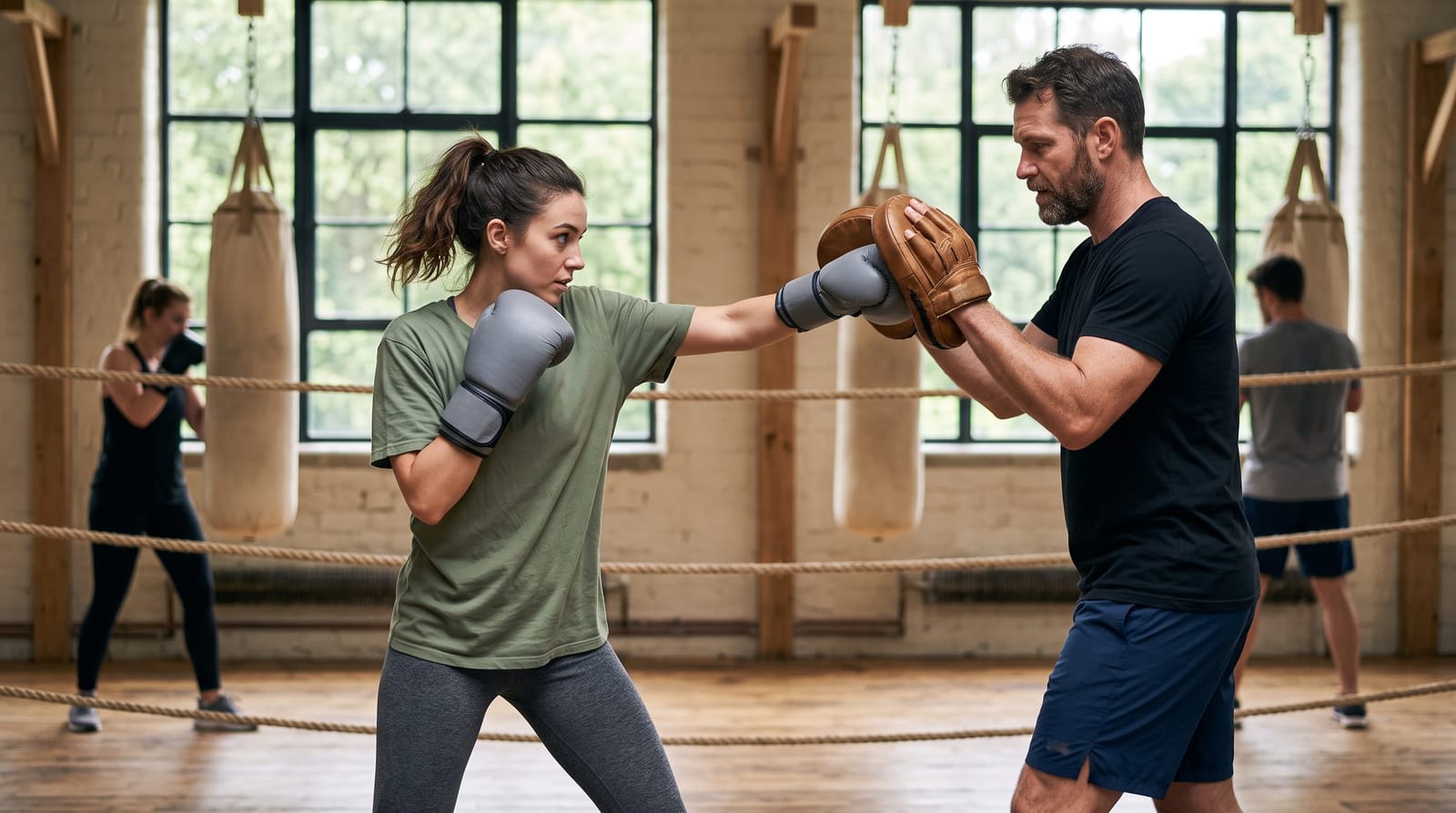
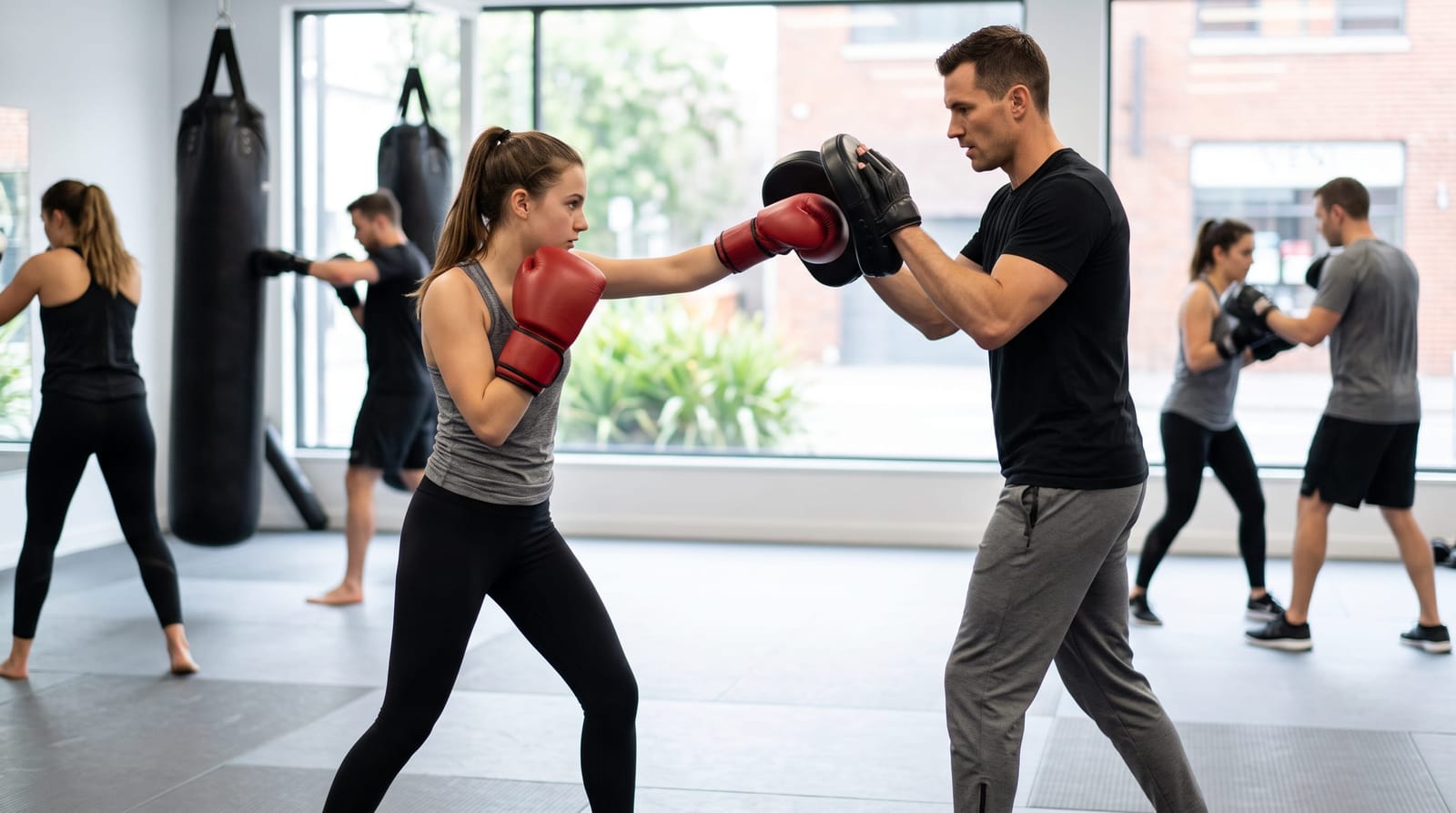
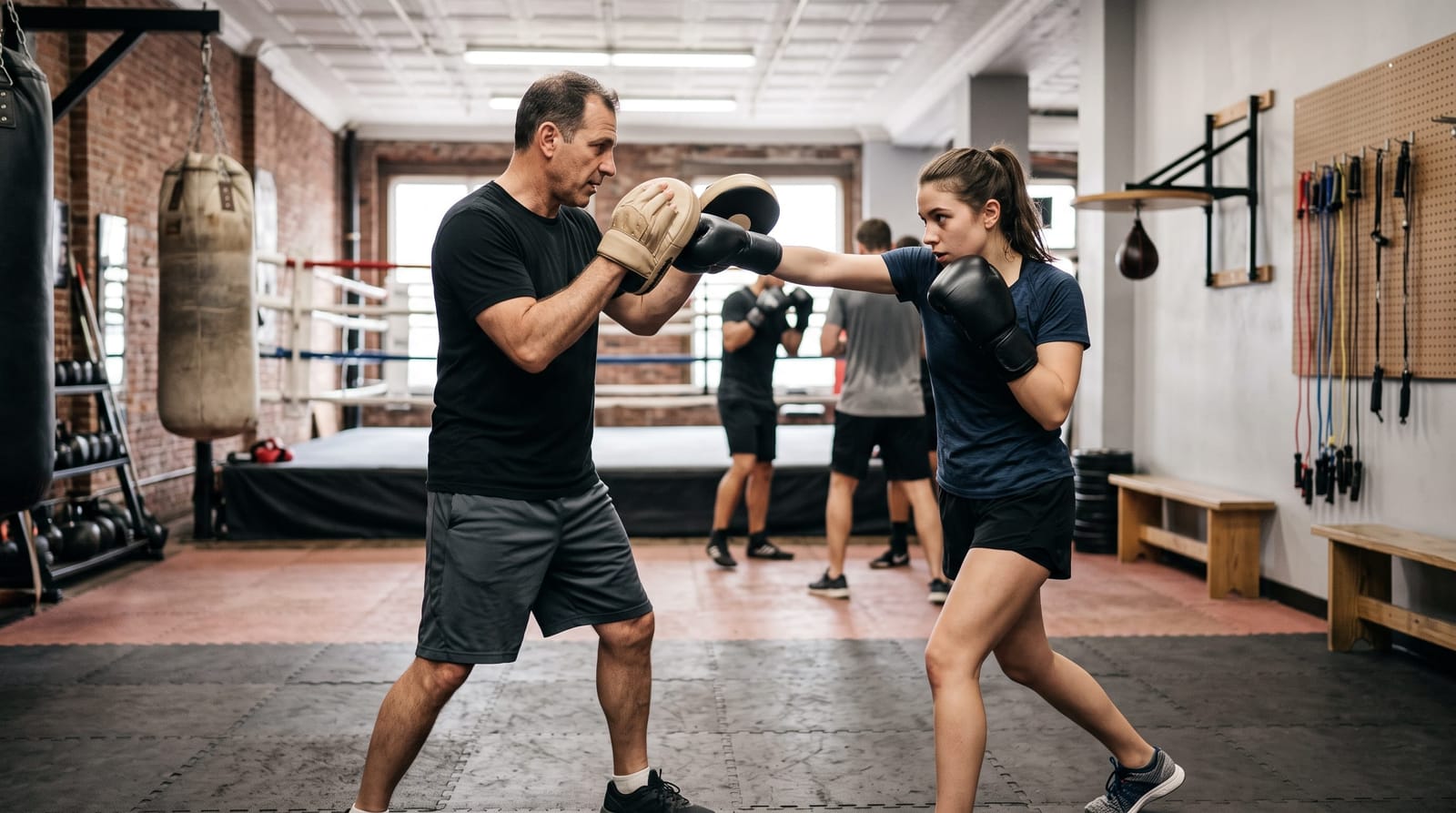
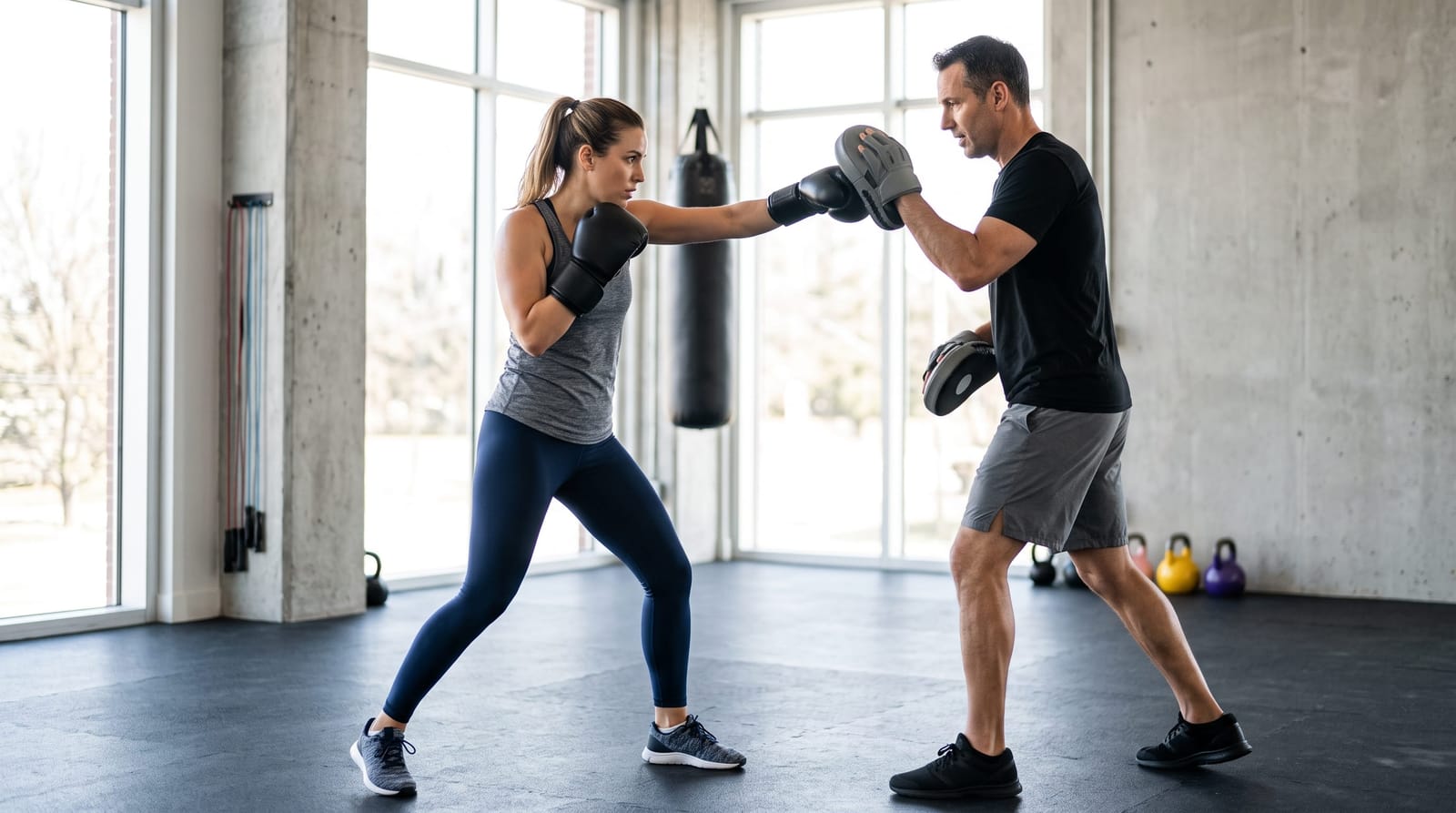
Survive 41's hybrid class model bridges that gap for members in Yonkers, Mount Vernon, the Bronx, New Rochelle, and Pelham. The structure combines real boxing technique with structured fitness conditioning, so you're never just going through the motions.
What the Hybrid Format Delivers
- Technique-first coaching: Coaches teach actual boxing mechanics, footwork, guard position, punch mechanics, not just "punch the bag fast." This means every rep builds a real skill.
- Conditioning rounds: Classes incorporate bag work, pad work, bodyweight circuits, and core training to keep intensity high throughout.
- Scalable intensity: Beginners and experienced athletes train together. Coaches adjust load and complexity so everyone is challenged at their level.
- Community accountability: Group classes create the social commitment that solo gym sessions rarely sustain.
The result is a class that produces the calorie burn of spin, the strength benefits of a functional strength program, and the mental engagement of a skill sport, all in one 60-minute session. That's the compounded value of the boxing workout classes benefits that keeps members coming back and seeing results that a single-format class simply can't match.
Side-by-Side Summary: Boxing vs. Other Popular Classes
| Category | Boxing | Spin | Yoga | Standard Cardio |
|---|---|---|---|---|
| Calories/Hour | 500-800 | 400-600 | 180-400 | 300-500 |
| Full-Body Training | ✓ Yes | Mostly lower body | Partial | Partial |
| Skill Development | ✓ High | Low | Moderate | None |
| Stress Relief | ✓ High | Moderate | High | Moderate |
| Mental Engagement | ✓ Very High | Low | Moderate | Low |
| Coordination & Agility | ✓ High | Low | Moderate | Low |
Conclusion: Choose the Class That Trains Your Whole Self
Every workout class has its place. Yoga builds mobility. Spin builds endurance. But if your goal is total body transformation, in the gym and in your life, the boxing workout classes benefits are simply unmatched. You get more calories burned, more muscle engaged, more coordination built, and more mental resilience developed than any single-format class can offer. Survive 41's hybrid approach takes those advantages and structures them into sessions designed for real people with real schedules who want real results.
Ready to experience it yourself? Come train with us at Survive 41 in Yonkers. Your first class will show you exactly why boxing is different, and why so many people never go back to anything else.