What to Expect From Your First Boxing Class at Survive 41
If you've been searching for first boxing class what to expect and feel a mix of excitement and nerves, you're in exactly the right place. Walking into a boxing gym for the first time can feel intimidating: the sound of gloves hitting bags, the intensity on people's faces, the unfamiliar equipment. But here's the truth: every single person in that gym was once exactly where you are right now. At Survive 41, serving the Bronx, Yonkers, Mount Vernon, New Rochelle, and Pelham, boxing isn't reserved for fighters or competitive athletes. It's for anyone who's ready to show up. This guide walks you through every minute of your first class: what happens, what to bring, what to wear, and how our coaches make sure beginners don't just survive their first session, they leave wanting more.
The Truth About Who Shows Up to a First Boxing Class
One of the biggest misconceptions about boxing classes is that they're filled with seasoned fighters who will judge every move you make. The reality, backed by the sport's explosive growth in fitness culture, couldn't be more different. According to the Sports & Fitness Industry Association, boxing fitness participation has grown by over 30% in the past decade, with the majority of participants being everyday people, not competitive athletes.
At Survive 41, any given class might have a 45-year-old nurse standing next to a college student next to a retired tradesperson. What unites them isn't athletic background: it's the decision to show up. Coaches at Survive 41 are trained to work with absolute beginners, and the culture in the gym reflects that. Nobody is going to laugh at your jab. Nobody is going to roll their eyes when you ask how to stand. The community here was built intentionally around one idea: transformation is available to everyone.
Common Fears: and Why They Don't Hold Up
- "I'm not fit enough yet." The class builds your fitness. You don't need to arrive fit to start getting fit.
- "I'll get hit." Beginner classes at Survive 41 do not involve sparring. Pad work is controlled and coach-directed.
- "I'll look stupid." Every new student looks like a beginner. That's the point of being a beginner.
- "I'm too old." Boxing fitness has no age ceiling. Many of our most committed members started training in their 40s and 50s.
Before You Walk In: What to Bring and What to Wear
Preparation removes anxiety. Knowing exactly what to bring to your first boxing class means you can focus on learning instead of scrambling at the door. For a deeper breakdown of equipment, check out our guide on boxing class gear beginners need, but here's what you need to know for day one.
Essential Gear for Day One
- Hand wraps: These protect your knuckles, wrists, and the small bones in your hands. You can purchase inexpensive wraps (typically 180 inches in length) online or at the gym. Coaches can show you how to wrap at the start of class.
- Boxing gloves: Survive 41 has loaner gloves available for first-timers, but investing in your own pair quickly becomes important for hygiene and fit. A 12-16 oz glove is standard for most adult beginners.
- Athletic shoes: Cross-trainers or court shoes work well. Running shoes with thick heel cushioning can limit your footwork, so flat-soled options are preferred.
- Moisture-wicking clothing: You will sweat: a lot. Lightweight shorts or leggings and a breathable top are ideal. Avoid heavy cotton.
- Water bottle: Bring a large one. Staying hydrated throughout a boxing class isn't optional: it's essential to performance and safety.
Arrive 10-15 Minutes Early
Coaches at Survive 41 strongly encourage new students to arrive early. That extra time lets you introduce yourself, get your hands wrapped, familiarize yourself with the space, and ask any questions before the energy of class kicks in. You'll feel significantly more settled once the warm-up begins if you've already had 10 minutes to breathe and look around.
The Warm-Up: Setting the Tone for Everything That Follows
A Survive 41 class opens with a structured warm-up that lasts approximately 10 to 15 minutes. This isn't filler: it's foundational. The warm-up raises your heart rate progressively, activates the muscles you'll use most, and starts building the movement vocabulary you'll draw on throughout the session.
Expect a combination of jump rope, shadowboxing, and dynamic bodyweight movements like hip circles, arm swings, and lateral shuffles. Jump rope alone is one of the most underrated conditioning tools in boxing: studies in sports science have shown that 10 minutes of jumping rope can be equivalent in cardiovascular demand to running an 8-minute mile. It also begins training your footwork and rhythm from the very first class.
During shadowboxing, coaches will introduce the basic stance, feet shoulder-width apart, lead foot forward, hands up, and walk beginners through the fundamental punches: the jab, the cross, the hook, and the uppercut. You won't be expected to master these in one session. The goal is simply exposure and body awareness.
Pad Work and Bag Rounds: The Heart of the Class
Once the warm-up is complete, class moves into the core training block. This is where the real learning happens, and for most first-timers, it's the part they've been most curious, and most nervous, about.
Pad Work With a Coach or Partner
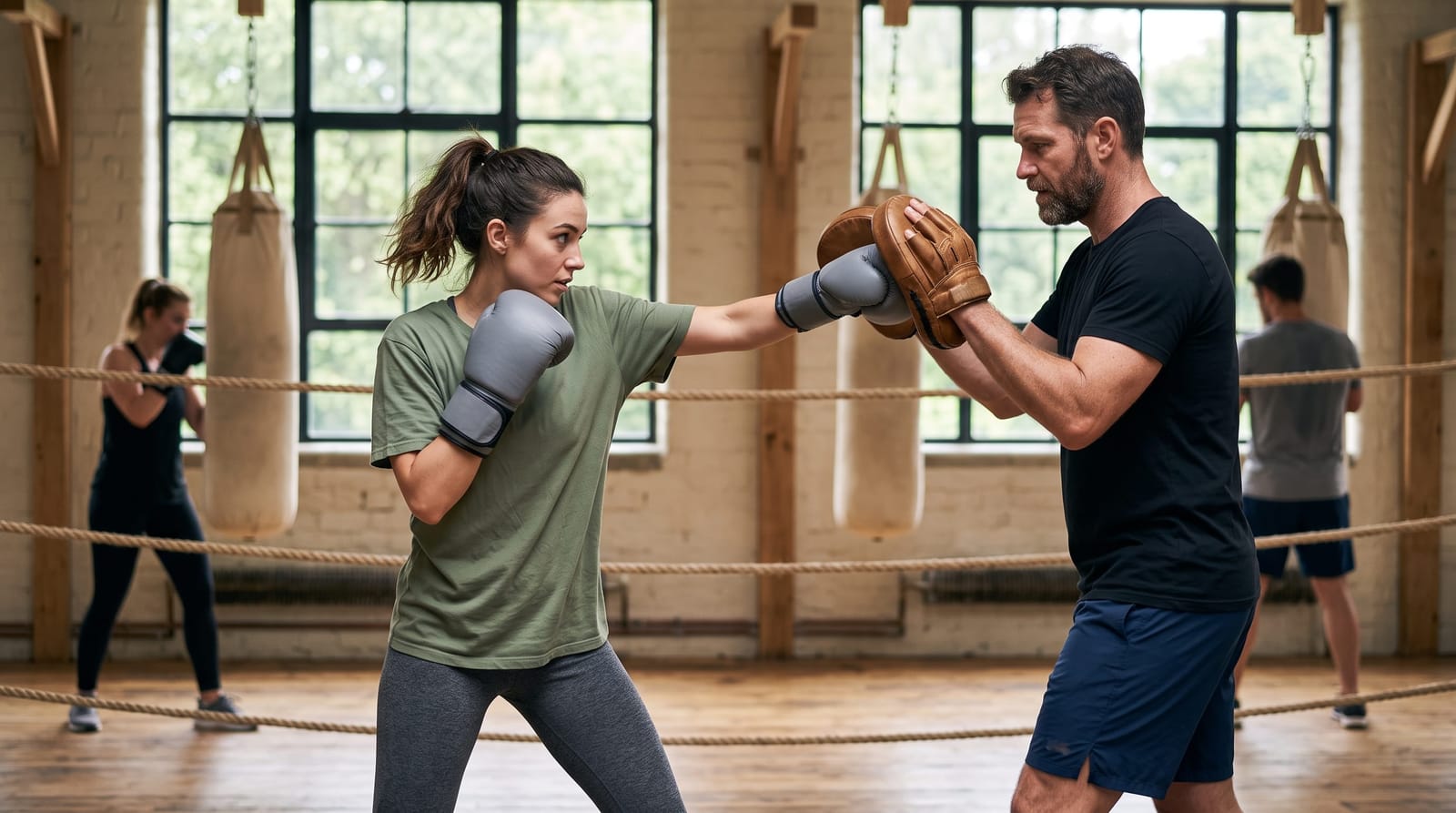
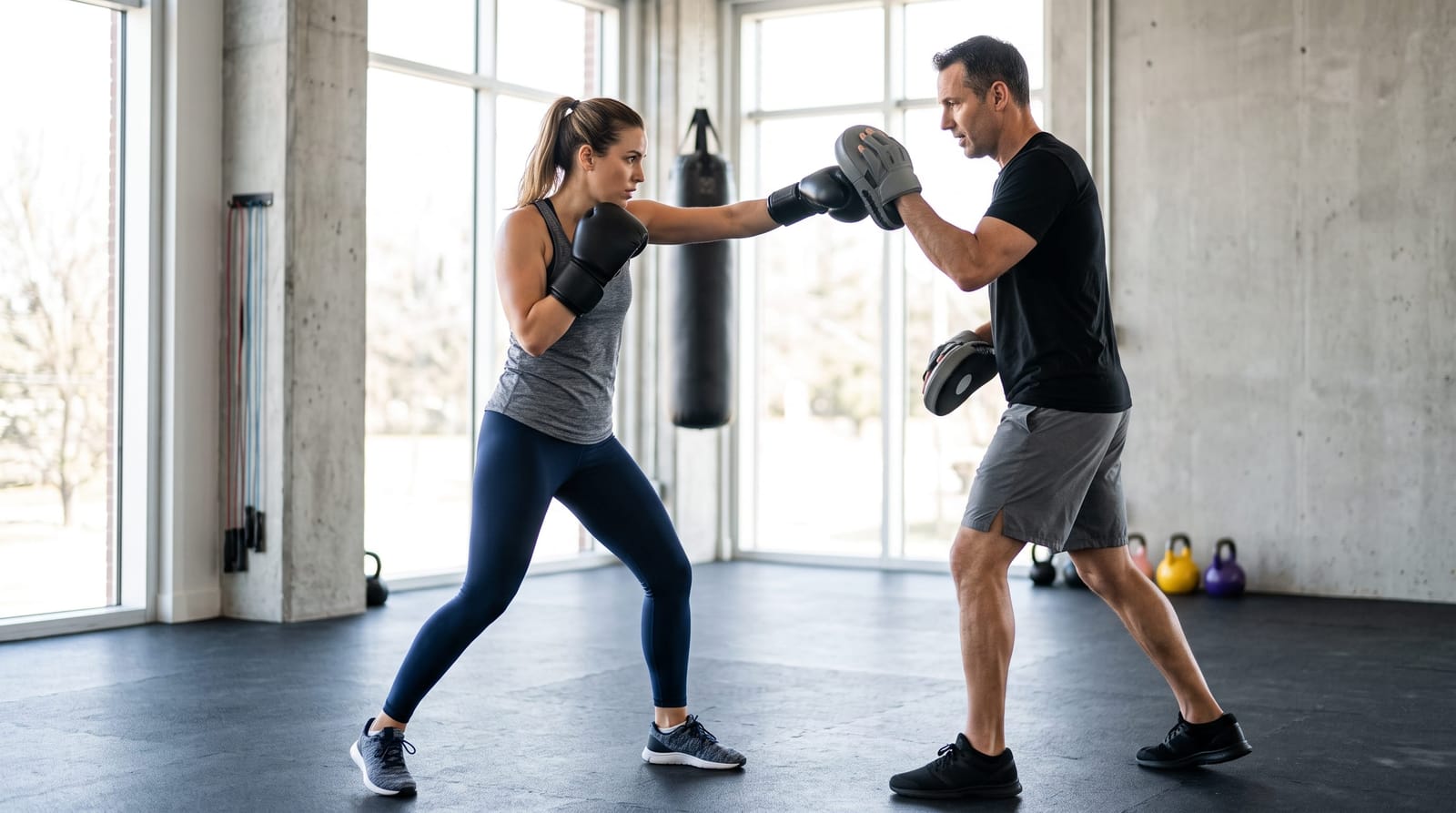
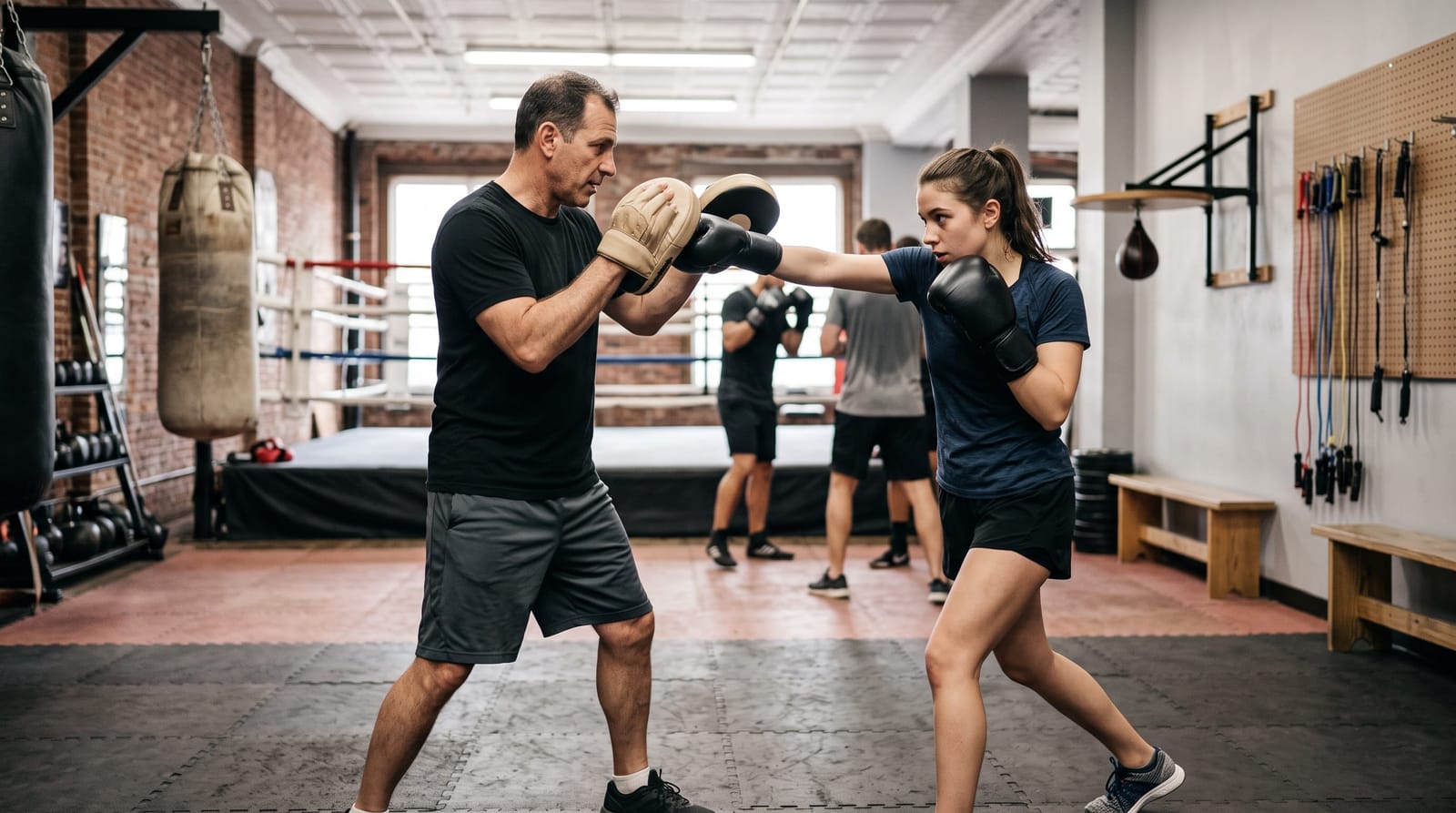
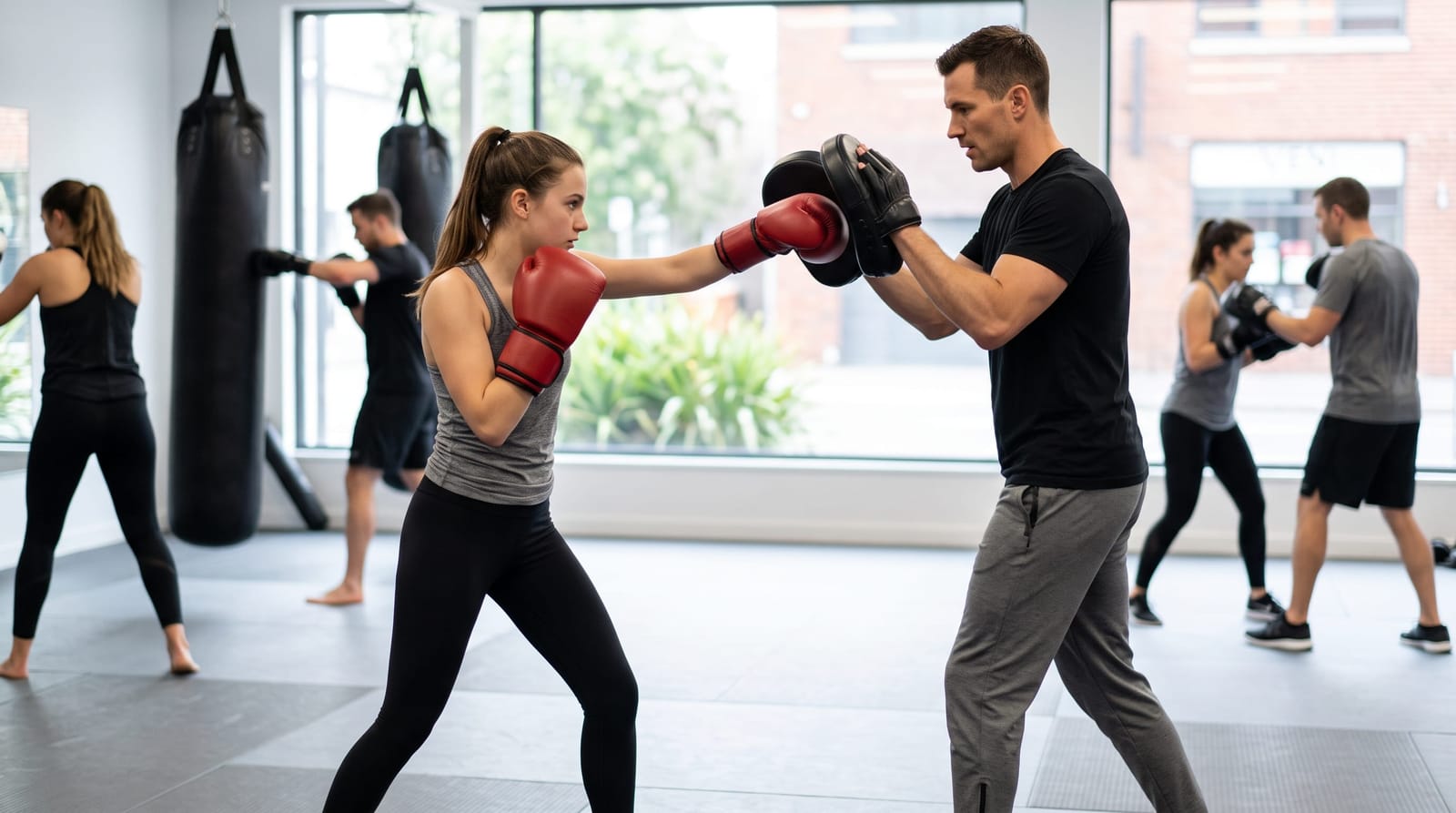
Pad work involves one person holding focus mitts (padded targets) while the other throws combinations. At Survive 41, beginners typically work directly with a coach during their first few sessions, which provides immediate feedback on technique, timing, and power generation. The coach controls the pace entirely: there's no pressure to throw hard or fast before you're ready.
A typical combination for a beginner might be as simple as: jab, cross, jab. As you build comfort, coaches layer in movement, defense, and more complex sequences. This progressive approach means you're always being stretched slightly beyond your comfort zone without being thrown into the deep end.
Heavy Bag Rounds
Heavy bag rounds typically run in 2-3 minute intervals with 60 seconds of rest between rounds: mirroring the structure of an actual boxing match. Research published in the Journal of Strength and Conditioning Research found that boxing-style interval training elevates heart rate to 75-85% of maximum capacity, placing it firmly in the high-intensity cardio category. For a beginner, even 3 rounds on the bag will feel like a serious workout. That's normal and expected.
Coaches circulate during bag rounds, offering corrections and encouragement. You're not left alone to figure it out. Common first-class coaching cues include keeping your hands up after punching, breathing out on impact, and rotating your hips to generate power rather than relying on arm strength alone.
The Conditioning Finisher: Where Mental Toughness Gets Built
Every Survive 41 class ends with a conditioning finisher: typically 5 to 10 minutes of bodyweight circuits, core work, or movement drills. This is not punishment. It's the part of class where mental resilience is developed as directly as physical endurance.
Common finisher formats include:
- Rounds of burpees, mountain climbers, or squat jumps
- Plank holds and core circuits targeting rotational strength
- Partner push-up or squat challenges that build team energy
- Timed rounds of shadowboxing at maximum effort
First-timers are always encouraged to work at their own pace during finishers. Modifying a movement isn't failure: it's smart training. Coaches will always offer scaled versions of every exercise, and no one in the room will notice or care if you're doing a knee push-up instead of a full one. What matters is that you keep moving.
Cool-Down and What Happens After Class
The cool-down is a non-negotiable part of every session: roughly 5 minutes of static stretching, controlled breathing, and decompression. This is where your body begins its recovery, and it's also where the social culture of the gym comes alive.
After class, expect people to introduce themselves. At Survive 41, this isn't a gym where members plug in headphones and disappear. The community is genuinely connected, and first-timers are welcomed into that community from their very first session. Coaches make a point of checking in with new students after class: asking how it felt, answering questions, and giving a clear picture of what to work on before the next session.
How Sore Will You Be?
Honest answer: probably pretty sore, particularly in your shoulders, core, and legs. Boxing uses muscle groups in ways that most conventional exercise doesn't target in combination. The rotational demand of throwing punches, combined with the footwork and defensive movement, creates a full-body training stimulus. Most first-timers report significant soreness 24-48 hours after their first class. This is entirely normal and fades significantly after your second and third sessions as your body adapts.
How Often Should You Come Back?
One class is a taste. Real transformation happens through consistent attendance. If you're wondering how to build a sustainable training schedule as a beginner, our guide on how often should beginners do boxing classes breaks down exactly how to structure your first weeks of training without burning out or overreaching.
As a general starting point, most new students at Survive 41 begin with 2 sessions per week. This frequency allows adequate recovery time while building momentum. Within 4 to 6 weeks at this pace, the difference in conditioning, confidence, and technique becomes clearly visible: both to coaches and to the students themselves.
Your First Class Is the Hardest One You'll Ever Take
Not because it's physically the most demanding, though it will challenge you, but because it requires the most courage. Walking into an unfamiliar environment, trying something new, pushing through uncertainty: that takes more grit than any bag round or conditioning finisher. The good news is that after your first class, every subsequent session gets progressively easier to walk through the door.
At Survive 41, coaches and community exist specifically to support that first step and every step that follows. Boxing has a long tradition of reshaping people, not just their bodies, but their relationship with discipline, pressure, and self-belief. That tradition is alive in every class.
If you're ready to experience it for yourself, Survive 41 is accepting new students across Yonkers, the Bronx, Mount Vernon, New Rochelle, and Pelham. Show up 10 minutes early, bring water, and leave your expectations at the door. The only thing left to do is walk in.