
Is HIIT Good for Beginners? What You Need to Know Before Starting
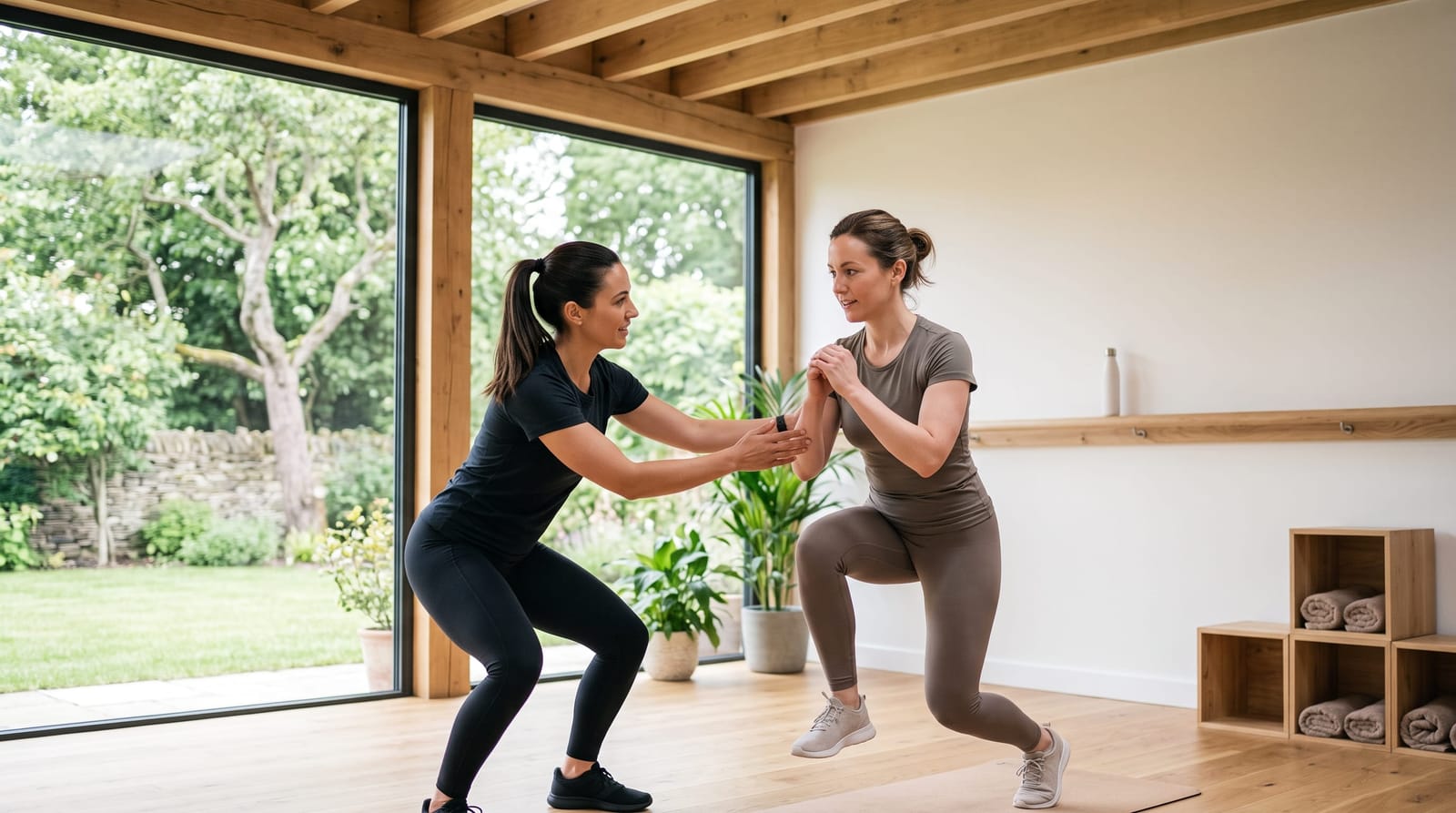
If you've been curious about HIIT classes but worried the intensity might be too much for where you're starting, you're not alone. "Is HIIT good for beginners?" is one of the most common questions new members ask before their first class at Survive 41. The short answer is yes, but the longer answer explains why, and more importantly, how to start smart. This beginner's guide breaks down what HIIT actually demands, how it gets modified for new athletes, and what your first four to eight weeks should realistically look like.
What Makes HIIT Challenging: and Why That's Actually a Good Thing for Beginners
High-intensity interval training alternates short bursts of hard effort with brief recovery periods. A typical structure might be 40 seconds of work followed by 20 seconds of rest, repeated across multiple rounds. That pattern is what makes HIIT so time-efficient: research shows that 20 to 30 minutes of HIIT can produce cardiovascular and metabolic benefits comparable to much longer moderate-intensity sessions.
Here's what surprises most beginners: the word "high-intensity" describes the effort relative to your current fitness level, not some fixed output that everyone in the room must hit. A seasoned athlete doing burpees at full speed and a brand-new member doing a modified step-back version are both working at high intensity for their individual bodies. That distinction is everything.
Studies suggest that HIIT can improve aerobic capacity by up to 9% in as few as five weeks for untrained individuals, making it one of the most efficient entry points into regular exercise. For beginners, that rate of measurable improvement is a powerful motivator to stay consistent during the early weeks when workouts feel hardest.
How Survive 41 Coaches Modify HIIT for New Members
Walking into your first HIIT class and seeing experienced athletes moving fast can feel intimidating. At Survive 41, the coaching staff is specifically trained to meet every member where they are, not where they think they should be.
Here's how modifications work in practice:
- Movement substitutions: Jumping exercises like box jumps or jump squats can be replaced with step-ups or bodyweight squats. You're training the same muscle groups and cardiovascular system, just without the impact that takes time to build tolerance for.
- Range-of-motion adjustments: A full push-up can become an elevated push-up from a bench or box. A full squat depth can be shortened while you build the hip mobility and leg strength to go lower safely.
- Resistance scaling: Kettlebell and dumbbell weights are always adjusted to where you are, not where the person next to you is. Starting lighter lets you focus on movement quality, which pays off significantly as you progress.
- Pacing guidance: Coaches cue beginners to work at a 6 or 7 out of 10 effort during early sessions rather than going all-out. Sustainable effort builds the aerobic base that supports harder pushes later.
The goal in your first few classes isn't to finish first or move fastest. It's to learn the movements, experience the interval structure, and let your body begin adapting.
Recommended Starting Frequency: How Often Should Beginners Do HIIT?
One of the most important decisions you'll make as a beginner is how often to train. HIIT places significant demand on the cardiovascular system and on muscles, and recovery is where actual adaptation happens. More sessions per week doesn't automatically mean faster results, especially early on.
For most beginners, starting with 2 HIIT sessions per week is a practical and well-supported approach. This frequency allows roughly 48 to 72 hours of recovery between sessions, which is the window most exercise scientists identify as important for muscle repair and cardiovascular adaptation. After two to three weeks at this frequency, most beginners notice reduced soreness and improved workout recovery: clear signs the body is adapting.
From weeks four through eight, adding a third session per week is a reasonable progression for members who are recovering well and feel ready. Jumping straight to four or five sessions before building that base is one of the most common mistakes beginners make, and it often leads to burnout or injury that derails progress entirely.
If you're wondering how long each session should be during this phase, the question of optimal HIIT workout duration for maximum results is worth exploring as you build your training schedule: session length and frequency work together, and getting both right matters.
Building Intensity Safely: A Week-by-Week Progression Framework
The first four to eight weeks of HIIT training follow a predictable and manageable arc when approached correctly. Here's a general framework for thinking about that progression:
Weeks 1-2: Foundation Phase
Focus entirely on learning movement patterns and getting comfortable with the interval structure. Work at 60-70% of your perceived maximum effort. Expect soreness, especially in your legs. This is normal and decreases significantly after the first two weeks. Attend two sessions per week maximum.
Weeks 3-4: Adaptation Phase
Your body begins to recover faster between sessions. You'll notice you can maintain effort more consistently through a full workout. Start pushing effort to 70-75% on movements you've become comfortable with. Continue with two sessions per week, or introduce a lighter third session if recovery has been strong.
Weeks 5-6: Building Phase
This is typically when beginners start to feel genuine momentum. Movements that were modified can often be progressed toward their standard form. Effort levels can push toward 80% on familiar exercises. Three sessions per week becomes realistic for most people at this stage.
Weeks 7-8: Integration Phase
You're no longer a beginner in the traditional sense. Your cardiovascular base supports harder efforts, recovery is efficient, and movement quality has improved substantially. This is the point where the energy of group HIIT training starts to feel like fuel rather than pressure.
Common Beginner Mistakes to Avoid in Your First HIIT Classes
Knowing what not to do is just as valuable as knowing what to do. These are the patterns that most often slow beginners down:
- Skipping the warm-up: HIIT demands that your muscles and joints are primed before the first interval. Showing up late and jumping straight into work sets creates unnecessary injury risk.
- Chasing other people's intensity: The person next to you has a different fitness history, different recovery capacity, and different goals. Your effort should be relative to your own baseline.
- Ignoring rest days: Rest isn't laziness: it's where your body rebuilds. Beginners who train every day in the first few weeks consistently report hitting a wall by week three.
- Neglecting nutrition and hydration: HIIT significantly elevates caloric expenditure and sweat rate. Arriving to class under-fueled or dehydrated reduces performance and recovery. Consult a registered dietitian if you have specific questions about nutrition strategies for your training goals.
- Expecting linear progress: Some weeks will feel harder than others. Sleep quality, stress, and daily activity all affect how a HIIT session feels. Progress over weeks, not individual workouts, is the right lens.
Frequently Asked Questions
Is HIIT good for beginners with no gym experience?
Yes: HIIT is good for beginners even without prior gym experience, provided the exercises are properly modified and intensity is scaled appropriately. At Survive 41, coaches introduce new members to foundational movements before ramping up the challenge, making the format accessible regardless of starting point.
How sore should I expect to be after my first HIIT class?
Delayed onset muscle soreness (DOMS) is common after your first one to three sessions, typically peaking 24 to 48 hours post-workout. This is a normal physiological response and usually decreases significantly after the first two weeks as your body adapts. If soreness is severe or lasts longer than 72 hours consistently, discuss this with your coach. For specific medical concerns, consult a healthcare professional.
Can beginners do HIIT every day?
Training HIIT every day is not recommended for beginners. Starting with two sessions per week allows for the recovery time necessary for adaptation and reduces the risk of overtraining. Consistency over months matters far more than frequency in the first few weeks.
How quickly will beginners see results from HIIT?
Most beginners notice cardiovascular improvements, like better breathing and faster recovery between intervals, within two to four weeks. Body composition changes typically become more noticeable after six to eight weeks of consistent training. Results vary based on individual factors including starting fitness level, nutrition, sleep, and adherence.
Starting Your HIIT Journey at Survive 41
HIIT is absolutely good for beginners, when it's taught correctly and scaled intelligently. The science supports it as one of the most time-efficient and adaptable training methods available, and the group environment at Survive 41 turns what can feel like a daunting first step into something genuinely energizing. Start with two sessions per week, embrace modifications without apology, and give yourself the full eight-week arc to build real momentum. The intensity that feels hard today becomes the baseline you'll surpass by week eight, and that progression is exactly what Survive 41 is built around.