How Many Calories Do You Burn in a Boxing Class?
If you're researching boxing classes and wondering whether they'll actually move the needle on your fitness goals, calorie burn is one of the first numbers you want to know. The short answer: a boxing class can burn anywhere from 400 to 1,000 calories per hour, but that range is wide for a reason. Your weight, the intensity of the session, the mix of drills, and your fitness level all play a role. This guide breaks down exactly how calories burned in a boxing class stack up, what variables matter most, and why structured boxing training consistently outperforms other cardio formats.
What Factors Determine How Many Calories You Burn in a Boxing Class?
Calorie burn is never a flat number. It's the result of several interacting variables, and understanding them helps you set realistic expectations and train smarter.
Body Weight
Heavier individuals burn more calories performing the same activity because the body requires more energy to move greater mass. A 150-pound person doing an hour of moderate bag work might burn around 450 calories, while a 200-pound person doing the same session could burn 600 or more. This isn't a disadvantage: it means boxing is particularly effective for people who are carrying extra weight and want rapid caloric expenditure from day one.
Intensity and Work-to-Rest Ratio
This is the biggest variable. A casual shadowboxing warm-up burns far fewer calories than an intense three-minute round on the heavy bag followed by 30 seconds of rest. The closer your session resembles actual fight-pace output, maximum effort punching, footwork, defensive movement, the higher your calories burned boxing class total climbs. Structured interval-based rounds push your heart rate into the 75-90% max zone, which is where caloric burn accelerates significantly.
Session Type: Bag Work vs. Sparring vs. Pad Work
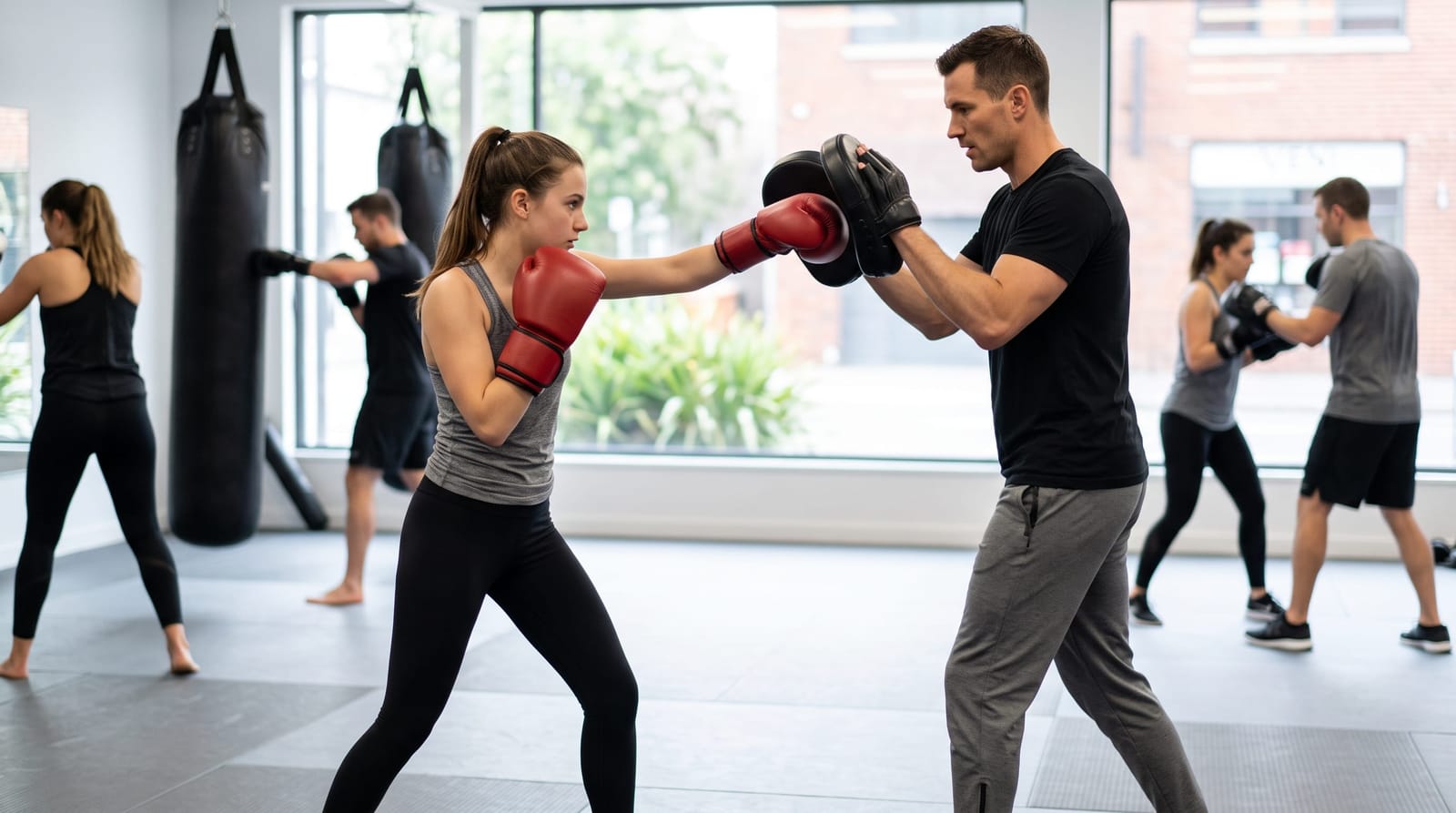
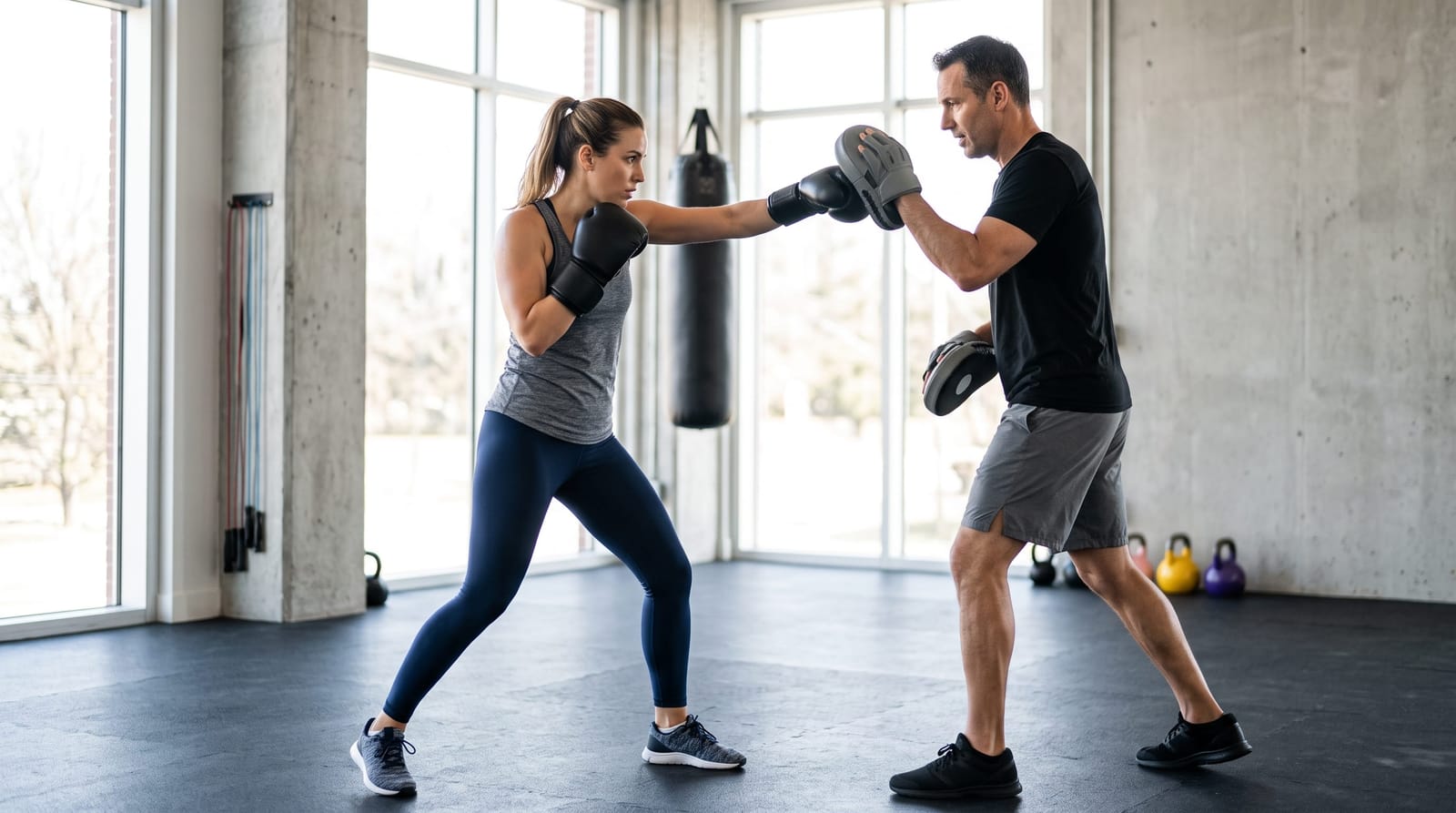
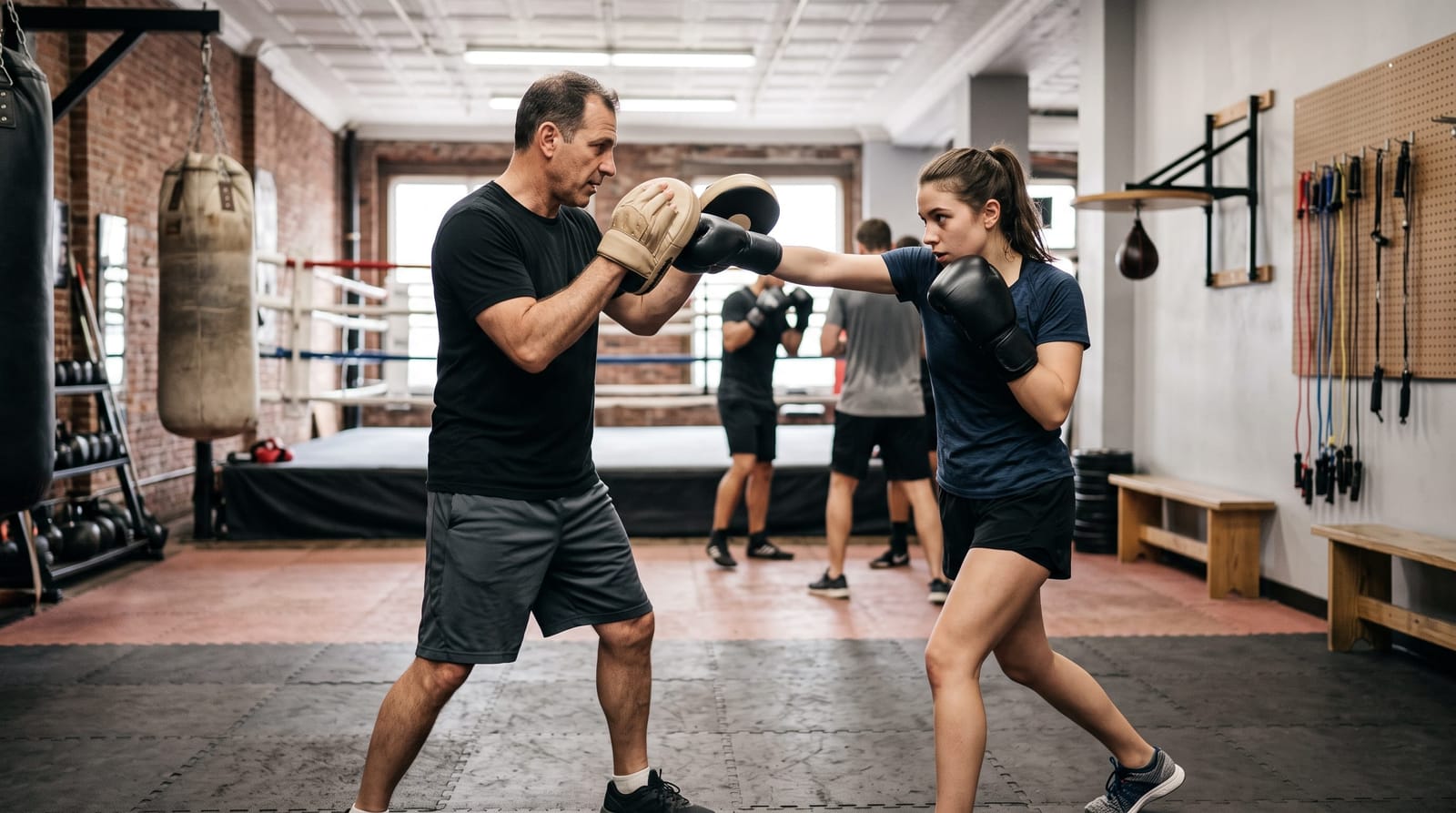
Research consistently shows that sparring burns more calories than solo bag work because it demands constant reactive movement with no predictable pattern. Pad work falls in between: your coach forces you to move, counter, and stay engaged. Bag work is controllable and still highly effective, especially when done with timed rounds and minimal rest.
Duration
A 45-minute class and a 90-minute class produce very different numbers. Most boxing classes run 60 minutes, which is the benchmark for the 400-1,000 calorie range. Shorter sessions still burn significantly more calories per minute than lower-intensity cardio like walking or cycling at a comfortable pace.
Calorie Burn Estimates by Weight and Intensity
The following estimates are based on one hour of boxing training. These figures reflect calories burned boxing class format, not casual shadowboxing, but structured class-based training with timed rounds, bag work, and conditioning drills.
- 130 lbs / Light Intensity: ~380-420 calories per hour
- 130 lbs / High Intensity: ~550-650 calories per hour
- 155 lbs / Light Intensity: ~450-500 calories per hour
- 155 lbs / High Intensity: ~650-750 calories per hour
- 185 lbs / Light Intensity: ~540-580 calories per hour
- 185 lbs / High Intensity: ~750-880 calories per hour
- 220 lbs / High Intensity: ~900-1,000+ calories per hour
These numbers make boxing one of the highest calorie-burning activities available in a group class format, and that's before accounting for the afterburn effect discussed below.
How Boxing Compares to Other Popular Cardio Formats
Context matters. The calories burned in a boxing class become even more impressive when you compare them directly to other forms of cardio that people typically use for weight loss and conditioning.
- Running (6 mph): ~600 calories/hour for a 155-lb person: competitive, but repetitive and high-impact on joints
- Cycling (moderate): ~400-500 calories/hour: lower intensity, primarily lower body
- Rowing Machine: ~500-600 calories/hour: excellent, but limited skill development
- Zumba / Dance Cardio: ~300-450 calories/hour: fun but inconsistent intensity
- Boxing Class (high intensity): ~650-1,000 calories/hour: full body, skill-based, variable intensity
Boxing doesn't just match these alternatives: it typically surpasses them while also building real skills, improving coordination, and developing mental toughness. The calories burned in a boxing class reflect the full-body demand of the sport. As we explain in detail in our breakdown of what muscles boxing actually trains, every major muscle group is engaged simultaneously, which is why the energy cost is so high.
The Afterburn Effect: Why Calories Burned in a Boxing Class Don't Stop When Class Ends
One of the most underappreciated benefits of high-intensity boxing training is excess post-exercise oxygen consumption: commonly called EPOC or the "afterburn effect." When you push your body to high-intensity thresholds, it takes hours (sometimes up to 24-36 hours) to fully return to its resting metabolic state. During that recovery window, your body continues burning calories at an elevated rate.
Low-intensity steady-state cardio like jogging or cycling produces minimal EPOC. Boxing classes that incorporate intense bag rounds, bursts of bodyweight conditioning, and minimal rest intervals generate significant EPOC because they repeatedly push the body into anaerobic zones. This means the 700 calories you burned during class may be followed by an additional 100-200 calories burned over the next several hours simply from recovery processes.
At Survive 41, sessions are structured specifically to maximize this effect. The combination of boxing fundamentals and HIIT-style conditioning elements ensures that your heart rate spikes, recovers, and spikes again: a pattern that research consistently links to elevated post-workout calorie burn.
Why Survive 41's Class Structure Maximizes Caloric Burn
Not every boxing class burns the same number of calories. A gym where you shadowbox at a relaxed pace for an hour is not the same as one where you're hitting the heavy bag in timed rounds, dropping into bodyweight circuits between rounds, and finishing with pad work that keeps your heart rate elevated from start to finish.
Survive 41's programming in Yonkers, Mount Vernon, and the Bronx is built around interval-based training that pairs authentic boxing technique with conditioning sequences designed to maximize caloric output. Every class includes:
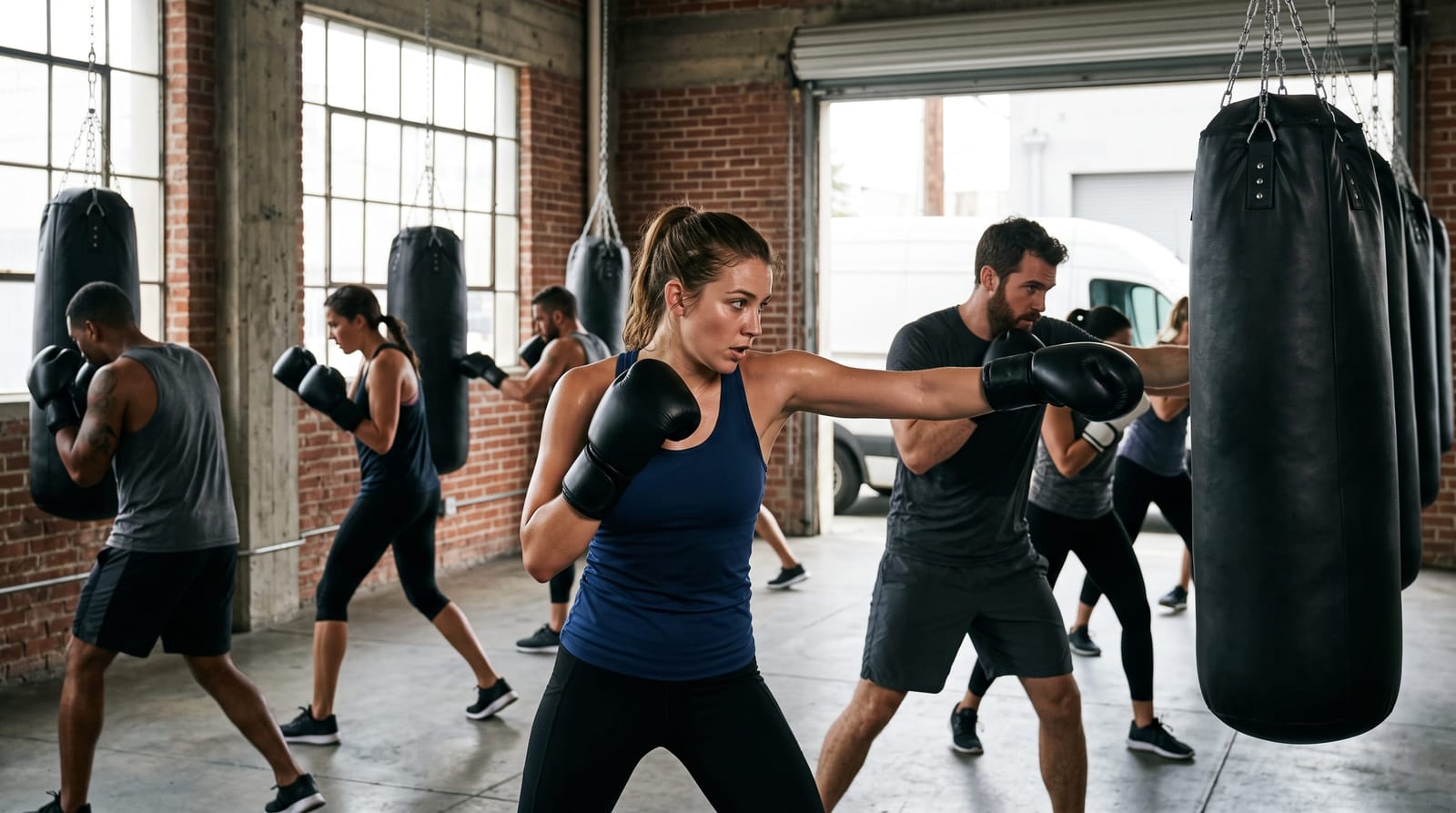
- Timed heavy bag rounds with structured rest intervals to maintain intensity
- Combination work that engages the full kinetic chain: legs, core, shoulders, arms
- Bodyweight conditioning drills between rounds to prevent full recovery and keep the caloric burn elevated
- Pad work sessions that add unpredictability and reaction-based movement, increasing energy demand
The result is a session where calories burned in a boxing class regularly reach the upper end of the estimated range, especially as members build endurance and push harder over time.
Frequently Asked Questions
How many calories does a 30-minute boxing class burn?
A 30-minute boxing class typically burns between 200 and 500 calories depending on your weight and the intensity of the session. High-intensity 30-minute sessions can push toward the upper end of that range if there is minimal rest and the work periods are truly maximum effort.
Is boxing better than running for burning calories?
For most people, a high-intensity boxing class burns a comparable or greater number of calories than running, while also engaging the upper body and core rather than just the lower body. Boxing also tends to be lower impact on the knees and hips over time compared to sustained running.
Does boxing help you lose belly fat specifically?
No exercise burns fat from one specific area: spot reduction is a myth. However, the high caloric expenditure and hormonal response from intense boxing training creates the conditions for overall fat loss, including the abdominal region, when combined with a consistent diet.
How often should I take boxing classes to see results?
Most fitness professionals recommend 3-4 sessions per week for noticeable changes in body composition. At that frequency, the cumulative caloric burn from boxing classes, combined with the afterburn effect, creates a significant weekly energy deficit that supports fat loss and improved cardiovascular fitness.
Final Takeaway
Calories burned in a boxing class typically range from 400 to 1,000 per hour, making it one of the most effective calorie-burning workouts available regardless of fitness level. The exact number depends on your weight, the intensity of the session, and how the class is structured. When boxing training is combined with HIIT elements, as it is at Survive 41, the caloric burn extends well beyond the class itself thanks to the afterburn effect. If you're serious about maximizing results, boxing isn't just a great option: it's one of the best tools available.