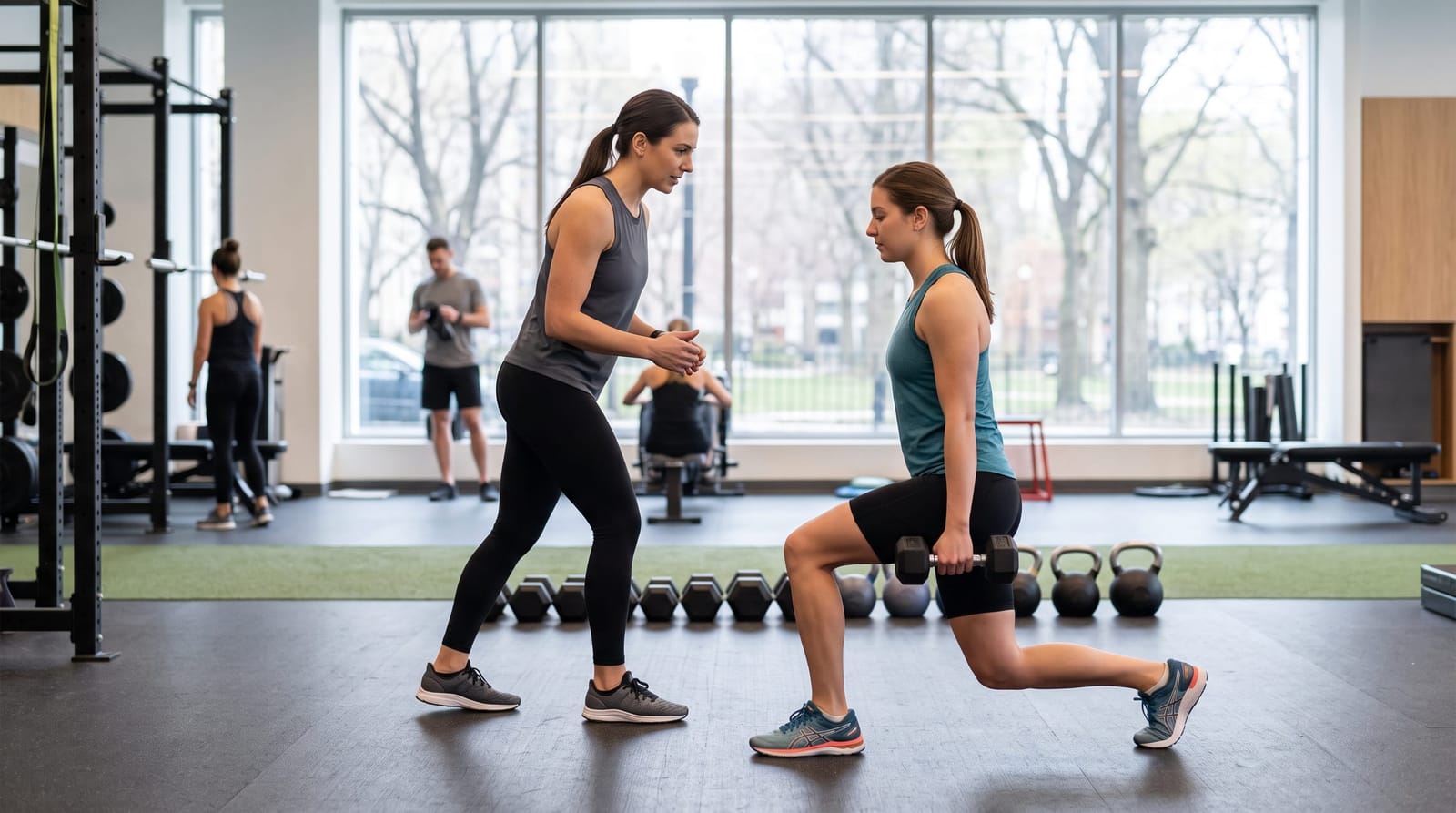
What Results Can You Expect From Personal Training at Survive 41?

If you're searching for personal training results what to expect, you've probably already done the mental math: time, money, energy. Before you commit, you want to know whether it's actually going to work. That's a completely fair question, and one every good trainer should be able to answer honestly. This beginner's guide walks you through exactly what personal training at Survive 41 delivers across your first 4, 8, and 12 weeks, covering both the physical milestones you can measure and the mental shifts that often matter just as much. We'll also show you how Survive 41's community and meal discount plans help accelerate those results so you're not white-knuckling through this alone. Whether you're brand new to fitness or returning after a long break, knowing what's coming makes showing up a whole lot easier.
Why Realistic Expectations Are the Foundation of Real Progress
Social media is flooded with dramatic 30-day transformations, and while those images can be motivating, they can also set you up for disappointment when your week-three check-in doesn't look like a magazine cover. Research consistently shows that meaningful, sustainable fitness changes typically unfold over months of consistent effort, with significant body composition shifts often becoming visible after six months to a year of dedicated training and aligned nutrition.
That doesn't mean nothing happens early on. It means you need a framework for recognizing and celebrating progress at every stage, not just at the finish line. Survive 41's trainers build that framework into your very first session.
The Assessment Comes First
Your first personal training session at Survive 41 is not a punishment workout designed to leave you crawling to your car. A qualified trainer will spend meaningful time, often the first 10 to 15 minutes, understanding your movement history, injuries, daily stress levels, and goals before you do a single rep. This baseline assessment is critical because it gives both you and your coach a measurable starting point. Without it, "progress" is just a feeling. With it, progress is a number you can track.
If you want a deeper look at what that first experience feels like, check out our guide on personal training for beginners what to expect before your first session.
Weeks 1-4: Building the Engine Before You Floor the Gas
During your first four weeks, the most important results are happening beneath the surface, in your nervous system, your joints, your sleep patterns, and your relationship with showing up consistently. Beginners often expect dramatic physical changes in this window and feel discouraged when the scale doesn't move dramatically. Here's what's actually happening during those early weeks.
Neuromuscular Adaptations: Your Brain Learning to Work With Your Body
In the first two to four weeks of training, the majority of strength gains come from neuromuscular adaptations: your brain getting better at recruiting muscle fibers efficiently. Studies suggest beginners can see strength improvements of 10 to 25 percent in the first month without significant muscle mass changes simply because the nervous system is becoming more coordinated. In practical terms, that means the squat that felt awkward and heavy in week one starts feeling more natural and controlled by week four. You're building a foundation, not just lifting weights.
Early Habit Wins
Survive 41's trainers coach accountability as aggressively as they coach movement. By week four, most new members report going to bed earlier, drinking more water, and making slightly better food choices, not because they're on a rigid diet, but because working with a coach creates a ripple effect of self-awareness. These small behavioral wins are worth celebrating because they're the infrastructure that holds everything else up.
Weeks 5-8: The Window Where Things Start Clicking
This is the phase where people around you start noticing something has changed, even if they can't quite name it. Your posture improves. Your energy is more stable throughout the day. You're walking differently. And yes, body composition shifts begin to become visible during this window for many members.
Measurable Physical Changes
With consistent training three to four times per week and reasonable nutrition support, many clients experience noticeable improvements in muscular endurance, cardiovascular capacity, and body composition between weeks five and eight. Research from strength training studies suggests that lean muscle gains of one to two pounds per month are realistic for most beginners, while body fat can decrease meaningfully when training is paired with a caloric deficit. Survive 41's meal discount partnerships with local nutrition providers help members support their training without the overwhelm of building a meal plan from scratch.
Mental Clarity and Confidence
By week six or seven, something else happens that no before-and-after photo captures: you start trusting yourself more. You walked into a gym uncertain of what you were doing, and now you know how to move, you know your trainer, and you know you can push through discomfort. That confidence doesn't stay in the gym: it follows you into job interviews, difficult conversations, and moments when you'd previously have quit. This is part of why Survive 41 coaches the whole person, not just the body.
Weeks 9-12: When the Compound Effect Becomes Undeniable
The twelve-week mark is where personal training results what to expect becomes a much more exciting conversation. This is the point at which months of small, consistent decisions stack into something genuinely transformative, and it's the milestone that tends to create lifelong fitness converts.
Physical Benchmarks at 12 Weeks
At twelve weeks of consistent personal training, members at Survive 41 commonly report improvements across several measurable categories:
- Strength: Most beginners can expect to increase their primary lifting weights by 20 to 40 percent over 12 weeks of progressive programming.
- Body composition: With aligned nutrition, losing 8 to 12 pounds of fat while maintaining or building lean muscle over this period is a realistic and healthy target for many people.
- Cardiovascular endurance: Members who struggled to sustain 15 minutes of moderate cardio in week one often find they can comfortably train for 45 to 60 minutes by week twelve.
- Mobility and pain reduction: Many members report reduced lower back discomfort and improved hip and shoulder mobility as movement patterns are corrected over time. (Note: if you have a specific medical condition, always consult your physician about what exercise is appropriate for your situation.)
Non-Physical Results That Define the Real Transformation
Ask any long-term Survive 41 member what changed most, and most won't lead with their weight. They'll tell you they sleep better. That they handle stress differently. That they stopped skipping hard things in life because skipping hard things at the gym no longer felt acceptable. Discipline built in the gym genuinely transfers. It's not a cliché: it's a documented behavioral pattern that coaches at Survive 41 see play out every single week.
You can read the full stories behind these transformations in our personal training transformation stories from Survive 41 members, where you'll see the numbers alongside the narratives that make them meaningful.
The Factors That Accelerate (or Slow Down) Your Results
Personal training is a powerful lever, but it's one lever in a larger system. Understanding what else influences your timeline helps you show up with the right strategy, not just the right shoes.
Consistency Is the Single Biggest Variable
Studies on exercise adherence suggest that people who train with a coach maintain their workout schedule at significantly higher rates than those training alone: some research points to adherence rates 40 to 50 percent higher with professional accountability in place. Missing sessions compounds in the wrong direction just as showing up compounds in the right one. Your trainer at Survive 41 will hold you accountable, but the decision to walk through the door is always yours.
Nutrition: The Other Half of the Equation
You cannot out-train a consistently poor diet: a reality every experienced coach will tell you. Survive 41 offers members access to meal discount plans with local nutrition partners, making it easier and more affordable to fuel your training without the guesswork. These aren't rigid diets handed down from a mountain: they're practical, flexible tools that complement the work you're doing in the gym.
Sleep, Stress, and Recovery
Results happen during recovery, not during the workout itself. Chronic sleep deprivation and high stress elevate cortisol, which can blunt muscle building and fat loss even when training and nutrition are dialed in. Your Survive 41 trainer will address these factors as part of coaching the whole person, because they know that what happens between sessions is as important as what happens during them.
How to Choose the Right Personal Trainer to Get These Results
Not every trainer will produce these outcomes, and knowing what separates a great coach from a mediocre one is crucial before you invest. The right trainer asks questions before prescribing workouts, adjusts programming based on your feedback, and sees you as an individual, not a template. If you're still in the decision-making phase, our guide on how to choose a personal trainer gives you seven specific questions to ask before you commit to anyone.
Survive 41's coaches in Yonkers, Mount Vernon, New Rochelle, Pelham, and the Bronx are selected not just for their certifications but for their ability to connect, motivate, and adapt. That combination is what turns a twelve-week program into a lifestyle.
Related Topics Worth Exploring
If this beginner's guide has answered your core question about personal training results what to expect, you may also find value in these related resources from the Survive 41 blog:
- Dive into real member journeys in our personal training transformation stories to see these timelines in action.
- If you're not quite sure what your first session looks like, our personal training for beginners what to expect guide removes every mystery before you walk in.
What to Take Away: and What to Do Next
Personal training results are real, measurable, and life-changing, but they follow a timeline that rewards patience and consistency over urgency. In weeks one through four, you're building the neuromuscular and behavioral foundation. In weeks five through eight, visible and internal changes begin compounding. By week twelve, the physical benchmarks and the mental transformation tend to speak for themselves.
At Survive 41, the process is supported by expert coaches, an encouraging community, and practical resources like meal discount plans that make the nutrition side of the equation manageable. You don't have to have everything figured out before you start: you just have to start.
Ready to see what twelve weeks can look like for you? Reach out to Survive 41 today to schedule your initial assessment and meet the coach who'll help you get there.